The best housewarming card message combines three elements: congratulations on the move, a warm wish for comfort and happiness, and one personal reference to the recipient or their home. Start with the neighborhood welcome if you don't know the recipient well, and choose the memory-making wish for close family and friends.
You're probably staring at a blank card while a gift bag waits by the door, or you're trying to welcome someone who moved in last week without sounding stiff. You don't need a long speech. You need wording that fits your relationship, names something real, and stops before it turns into a form letter.
Close friends can handle humor, pride, and a little emotion. Neighbors, coworkers, and professional contacts usually respond better to clear goodwill, one useful local tip, and no assumptions about buying, family, or how long they'll stay. If you're deciding what to write in a housewarming card, pick the strategy below that matches how well you know the household, then keep the template and swap in one detail only you would notice.
Table of Contents
- 1. The Warm Neighborhood Welcome
- 2. The Classic Blessing for a New Home
- 3. The Memory-Making Wish
- 4. The Helpful Neighbor Offer
- 5. The Playful Moving-Day Quip
- 6. The Invitation to Your First Gathering
- 7. The Short and Sweet Note
- 8. The Personalized AI-Assisted Card
- 8 Housewarming Card Message Ideas Compared
- Write, Personalize, and Send the Right Card
1. The Warm Neighborhood Welcome
Use this when you're greeting new neighbors, a coworker who relocated nearby, or a friend who moved across town. Lead with the community, not the property. You don't need to praise square footage or guess why they moved.
Many moves are local, so adjust your welcome to fit a familiar-city move as well as a long-distance one. For Q1 2025, Bank of America Institute data on local and longer-distance moves reported that moves within the same city rose 11% year over year while moves to another city rose 7%. That means a note about one street, market, or trail often lands better than a speech about starting over.

Two Ready Templates
Welcome to the neighborhood! Everyone here is friendly, and the Saturday farmers market on Elm is our favorite. We're so glad you're here.
Welcome home! If you ever need a hand, a cup of sugar, or a recommendation for the best pizza nearby, just knock on our door, two houses down.
- Name one local detail: Mention a park, coffee shop, trail, bakery, or quiet walking route so the note doesn't read like a template.
- Share contact details deliberately: Add your address or phone number only if you're open to a knock or text.
- Send it early: Aim for the first few weeks, while they're still learning the block and unpacking.
Pair that restrained, friendly tone with a design that feels like home rather than a sales flyer. A cottage illustration works especially well, such as a cozy cottage card design that leaves your short welcome room to breathe.
2. The Classic Blessing for a New Home
Choose a classic blessing when you want timeless warmth without jokes, local advice, or personal history. It's the safest option for relatives, older neighbors, professional contacts, and anyone whose humor or beliefs you don't know well.
This fits an established greeting tradition around major life milestones. Greeting Card Association industry facts on milestone card buying estimate that Americans purchase approximately 6.5 billion greeting cards each year, with annual retail sales of roughly $7 billion to $8 billion, and they identify purchasing a house as a major milestone that motivates card buying. A conventional line like "Congratulations on your new home" is clear because congratulations is already a recognized everyday card category.
Templates That Stay Elegant
May your new home be filled with peace, laughter, and happy memories for years to come. Wishing you every blessing.
Congratulations on your new home. May it shelter you in comfort and joy, and may every room hold a happy memory.
Put the blessing first, then add one personal sentence. Reference peaceful mornings, memorable dinners, the garden they mentioned, or how long they searched. Don't stack three blessings in a row. One polished wish plus one human detail sounds sincere, while repeated good fortune language starts to sound copied.
Keep religious wording separate from secular goodwill unless you know the recipient welcomes it. "Wishing you peace and comfort" works broadly. "God bless this house" is appropriate only when your relationship clearly supports that language.
An elegant or minimalist design matches this tone best. If you're sending a printed card, a new key card design gives the message a formal frame without distracting artwork competing with the blessing.
3. The Memory-Making Wish
For close family and friends, skip the generic congratulations and picture their actual life in the house. Name the dinners, mornings, celebrations, and ordinary routines you hope they'll enjoy. That's what turns a structure into a home in the reader's mind.
Start With a Future Scene
I can already picture the holiday dinners, late-night talks, and lazy Sunday mornings you'll share here. Here's to making countless memories under your new roof.
This home is going to hold so many good moments. I'm so proud of you both and can't wait to celebrate the first of many dinners here.
Make the template yours with one specific quality or shared memory. If she hosts soup night every winter, mention the first pot on the new stove. If he has talked for years about a reading chair by a window, wish him quiet chapters in that corner. If they rescued a dog, picture muddy paws by the back door.
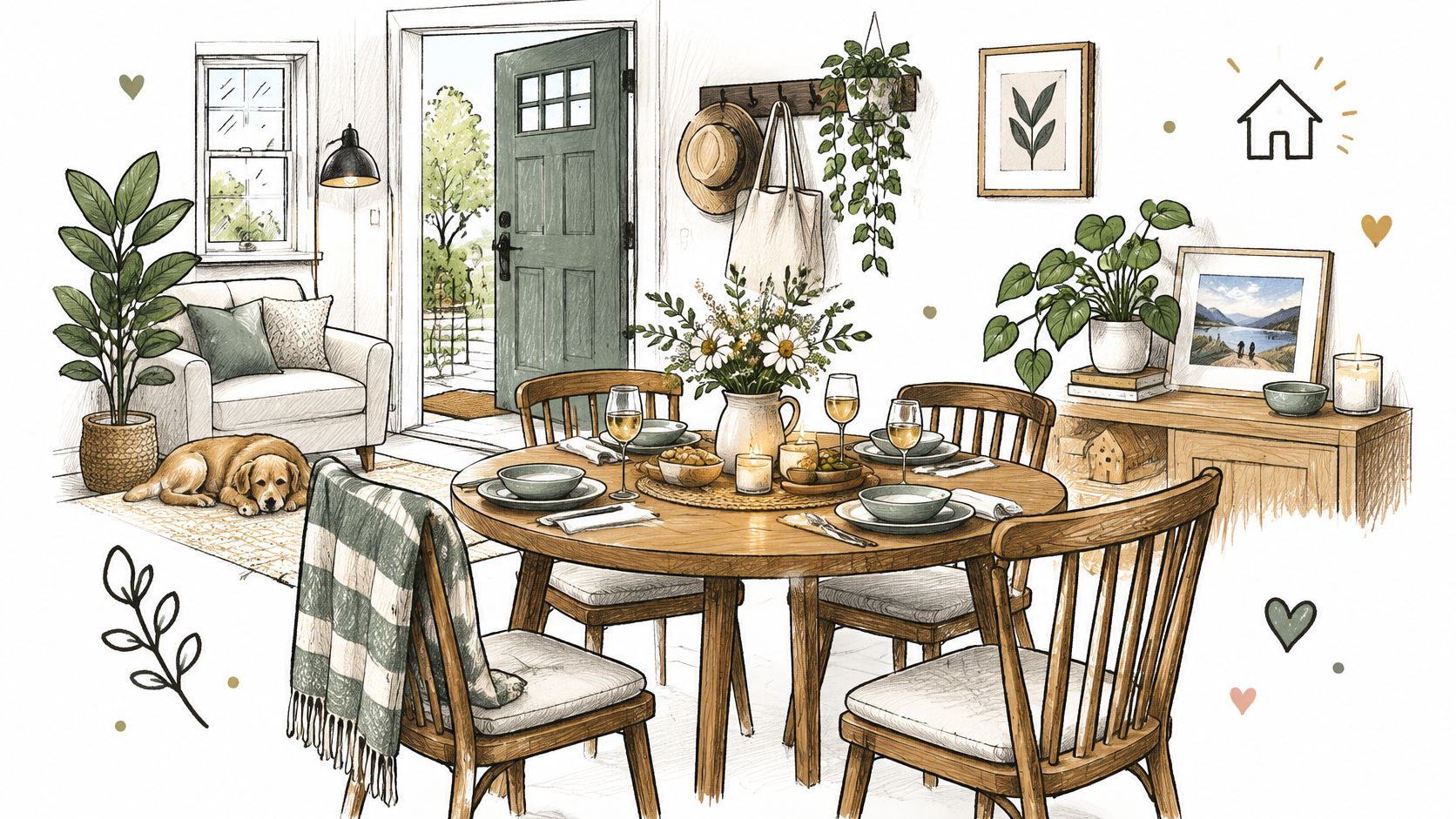
- Use a real habit: Game night, Sunday pancakes, porch coffee, and backyard tomatoes beat vague words like joy and togetherness.
- Keep it tight: Two or three sentences preserve the emotional punch and prevent a list of every possible future event.
- Match the visual: A dining table, photo-based design, or artwork tied to their style reinforces the memory you're describing.
Avoid predicting children, marriage, promotions, or decades in the house unless the recipient has shared those plans. Wish for the life they've already told you they want.
4. The Helpful Neighbor Offer
A concrete offer often feels more caring than another decorative sentence, especially while someone is surrounded by boxes and can't find the kettle. Pair brief congratulations with help you can deliver.
Congratulations on your new home! We have a ladder and a drill if you ever need them, and we're happy to watch the kids or pets while you unpack.
Welcome! Our family has been in the area for years, so if you need a plumber, a dentist, or a good place for brunch, just ask.
Make the Offer Usable
Specificity is the difference between kindness and a polite phrase they'll never use. "Let me know if you need anything" puts the work on them. "I can lend a hand truck on Saturday" gives them an easy yes.
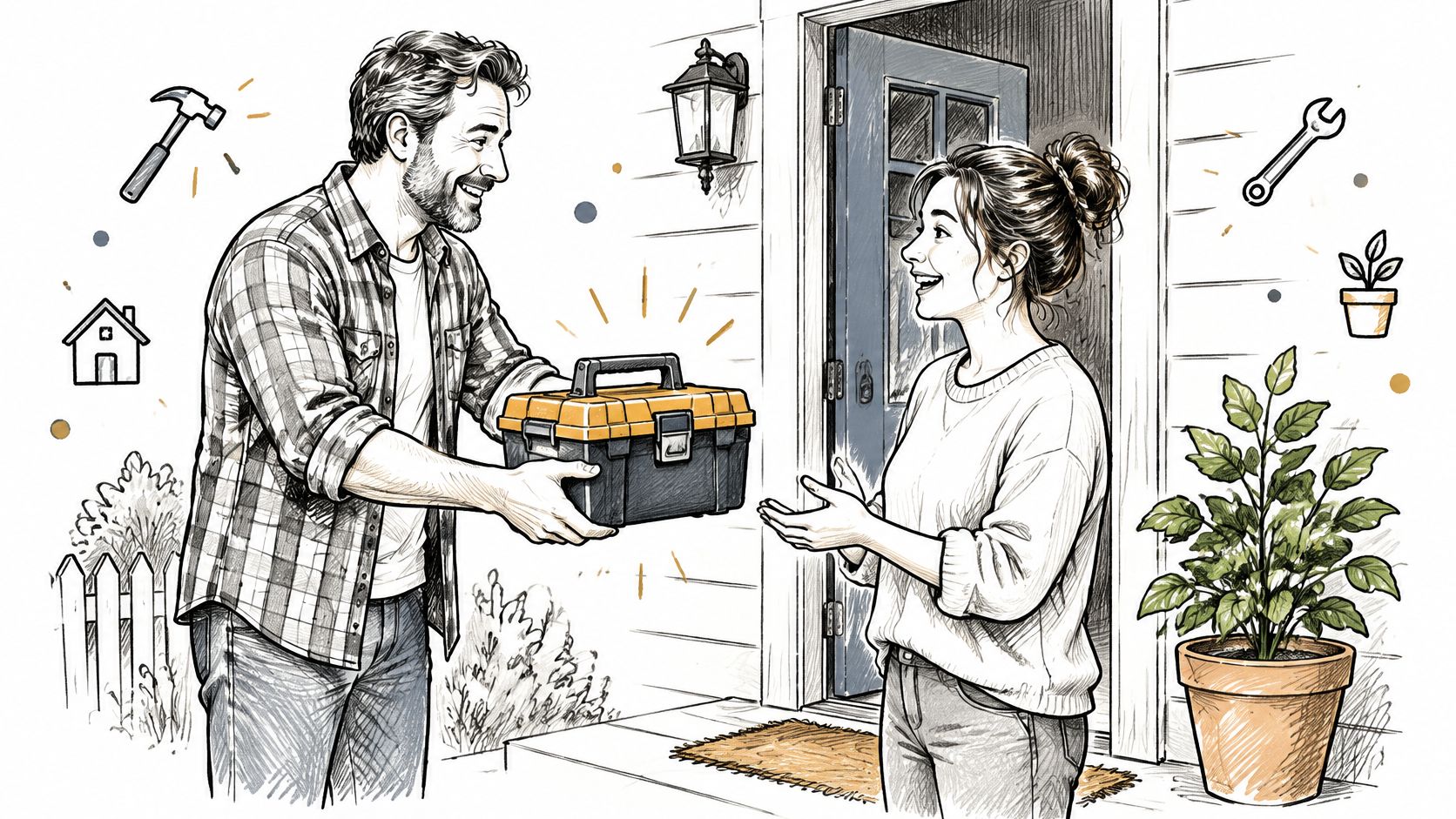
- Offer one or two things: Tools, package pickup, pet sitting, a meal, or trusted local recommendations are enough.
- State your limit politely: Say the day, task, or type of help you can provide instead of promising open-ended availability.
- Tell them how to reach you: Include your phone number, house number, or door description if you want them to follow through.
- Respect privacy: Don't ask for a tour, renovation plans, or details about the purchase in the same note.
This approach works for renters and owners because moving help doesn't depend on tenure. You're welcoming the person to daily life on the street, not commenting on a mortgage, purchase price, or long-term plans they may not want to discuss.
5. The Playful Moving-Day Quip
Save humor for people who already trade jokes with you. A playful line relieves moving stress when it targets boxes, takeout, lost scissors, or the universal mystery light switch. It falls flat when it mocks the house, the neighborhood, the price, or how long unpacking might take.
Congrats on the new place! The boxes can wait. Go find the best takeout menu and enjoy your first night in peace.
Now that you own a home, you officially have the best excuse to host a party. Consider this your official invitation to the first pizza night!
Use the second template only if you know they bought the place and enjoy hosting. For a renter, roommate, or someone moving after a difficult change, swap ownership language for "your new space" or "a place of your own" and keep the joke on the boxes.

One Joke Then Warmth
- Match their humor: Teasing works for close friends and siblings, not for a new manager or a neighbor you met once.
- Avoid house jokes sight unseen: Don't comment on size, repairs, layout, decorating, or "good bones" if you haven't visited.
- Close sincerely: Add a plain line such as "I'm really happy for you" so the card still marks the milestone.
A light visual carries part of the joke for you. A moving boxes card design lets one clever sentence do the work without filling the card with forced punchlines.
6. The Invitation to Your First Gathering
This message does two jobs. It congratulates the household and gently opens the door to a first dinner, coffee, or small get-together without demanding that exhausted movers set a date today.
Congratulations on your beautiful new home! We can't wait to see it and celebrate with you. Let us know when you're ready for your first dinner party.
We're so excited for you! Please let us know a date that works for your first get-together, and we'll bring the appetizers.
Address the actual household in front of you. Buyer households aren't all couples with children, and your wording shouldn't assume they are. A roundup of housewarming gift guidance citing NAR 2025 buyer demographics reports married couples at 61% of buyers, single women at 21%, and single men at 9%, with the median first-time-buyer age reaching 40. Use names you know, "you," or "everyone here" rather than defaulting to "your family."
Invite Without Pressure
- Give them control: Say "when you're ready" instead of proposing Friday while the kitchen is still packed.
- Bring something specific: Offer appetizers, dessert, drinks, folding chairs, or takeout so hosting doesn't become another chore.
- Keep the guest idea modest: Coffee, pizza, or a porch visit feels more realistic than a full party during the first month.
- Follow up once: A short call or text later is friendly. Repeated date requests turn the card into an obligation.
If the card accompanies food, flowers, or a plant, let the gift speak for itself. Write about gathering and goodwill, not a paragraph explaining what the item symbolizes.
7. The Short and Sweet Note
A two-line card is not lazy. It's often the right choice for a coworker, client, distant relative, group card, gift tag, or recipient who prefers understated gestures. Brevity works when every word sounds intentional.
Congrats on the new home! So happy for you both.
Home looks good on you. Wishing you joy in every room.
Choose neutral wording when you don't know whether the person rented, bought, downsized, moved in with roommates, or relocated after a breakup or job change. That caution matters because mobility patterns differ sharply by tenure. U.S. Census historical housing tables on movers summarize mobility rates of approximately 38% to 42% for renters and only 9% to 12% for homeowners across the period covered. "Your new place" and "your new space" celebrate the move without forcing an ownership story onto it.
How to Keep Short From Feeling Generic
- Add one precise wish: Peaceful mornings, good neighbors, restful nights, or happy gatherings fit almost any household.
- Sign it clearly: A handwritten signature or initials add a personal mark when the message itself is brief.
- Let design carry emotion: Strong artwork, a favorite color, or one meaningful photo can support a clean two-line note.
- Skip the explanation: Don't write that you're keeping it short or couldn't think of anything else.
For a difficult move, focus on welcome, safety, rest, and future comfort. Don't ask why it happened in a card meant to make the new place feel kinder.
8. The Personalized AI-Assisted Card
Use an AI assistant when the problem is a blank page, not a lack of feeling. Give it a short brief, edit the draft into your voice, approve the exact wording, and pair it with artwork or a photo before the card is printed and mailed.
A specific brief produces a specific card. Describe a friend's new townhouse, her love of gardening, and the herb pots she carried over before the furniture arrived. The draft can wish her sunny windowsills and first basil harvests while the artwork uses a floral illustration that suits the message.
A busy professional can take a different route. Use a photo connected to a colleague's new home near the office, then approve a brief welcome that stays professional and avoids jokes about commuting, workload, or showing up uninvited. The effort goes into choosing the right details, not inventing polished sentences from nothing.
Brief It Well and Edit Before Sending
- Name the relationship: Neighbor, sibling, client, roommate, and close friend each need different boundaries.
- Supply real details: Hobbies, local favorites, pets, a garden, or a long house search prevent generic output.
- State what to avoid: Exclude ownership, religion, children, humor, or gift mentions when they don't fit.
- Check practical details: Confirm the address is a supported U.S. destination and send early enough for the estimated delivery window during the settling-in weeks.
The exact approved message should stay typeset separately from generated artwork so it remains legible and accurate. Watch the process before you decide whether it fits your card.
8 Housewarming Card Message Ideas Compared
| Item | 🔄 Implementation Complexity | ⚡ Resource Requirements | 📊 Expected Outcome | ⭐ Key Advantage | 💡 Ideal Use Case |
|---|---|---|---|---|---|
| The Warm Neighborhood Welcome | Low | 2–3 sentences; one local detail helps | Friendly sense of community | Easy to personalize and suitable for many relationships | New neighbors, nearby colleagues, or acquaintances |
| The Classic Blessing for a New Home | Low | A brief, warm message; personal detail optional | Timeless wishes for peace and happiness | Appropriate for formal and family relationships | Relatives, older family members, or professional contacts |
| The Memory-Making Wish | Moderate | A few thoughtful sentences; personal anecdote optional | Meaningful, future-focused sentiment | Helps the recipient imagine life in the new home | Close friends and family |
| The Helpful Neighbor Offer | Moderate | A specific, realistic offer and contact details | Practical support and an opening for connection | Communicates care through useful help | Nearby neighbors, colleagues, or friends |
| The Playful Moving-Day Quip | Low | One humorous line and a warm closing | Lightens the mood during a stressful move | Memorable, casual tone | Close friends, siblings, or playful coworkers |
| The Invitation to Your First Gathering | Moderate | Flexible invitation; follow-up may be needed | Encourages a future get-together | Turns congratulations into a social plan | Friends, extended family, and social circles |
| The Short and Sweet Note | Very low | Under 25 words; signature recommended | Brief, clean expression of congratulations | Quick to write and easy to pair with visual design | Acquaintances, colleagues, or understated greetings |
| The Personalized AI-Assisted Card | Moderate | Recipient details, online service, review, and address check | Customized wording and artwork prepared for mailing | Helps overcome writer's block and allows preview before sending | Senders seeking personalized writing and design assistance |
Write, Personalize, and Send the Right Card
Start with the relationship, not a search for the perfect sentence. Neighbors need a clear welcome, perhaps one local recommendation or a realistic offer of help. Professional contacts need warmth without familiarity. Close friends and family can carry humor, pride, shared memories, and a vivid picture of future dinners or quiet mornings. When you're unsure, use the classic blessing or the short and sweet note, then add one detail that proves you wrote it for this person.
Check your assumptions before you seal the envelope. Don't call someone a homeowner unless you know they bought. Don't refer to a partner, children, or "your family" if the household may be one person, roommates, a multigenerational group, or a chosen family. Don't present a cultural ritual or religious blessing as universal. Bread and salt, for example, are commonly associated with Russian and Eastern European welcoming traditions, but that symbolism doesn't automatically belong in every card.
Match the message to the gift without narrating the gift. A plant doesn't need three sentences about growth, and a candle doesn't need a lecture on warmth and light. Let the present be useful or beautiful while the card carries the relationship: congratulations, one specific wish, and a closing in your own voice. If the card itself is the gift, invest the extra minute in artwork, a photo, or a handwritten signature.
Read the final wording out loud once. Remove any joke you would hesitate to say at their front door. Replace broad words like wonderful, amazing, and exciting with a scene, habit, local place, or quality you admire. Then confirm every name, the spelling of the street, and the full mailing address before sending.
Timing matters, but late is better than silent. Aim for the first few weeks after the move, when the card can still feel like part of settling in rather than a forgotten obligation. Allow for postal delays, especially if you're ordering a printed card, and don't promise an arrival date you can't control.
If writing and design are the obstacles, Mail This can turn a short recipient brief into an approval-ready message and personalized physical card. Its $9.99 base price includes the envelope and domestic postage, and you review the final wording and mailing details before sending. That approval step keeps the convenience from costing you the personal detail that makes a housewarming card worth keeping.
Turn your short brief about a friend, neighbor, or colleague into a polished housewarming message, custom artwork or photo card, and physical mail handled for you. Review the exact wording, design, recipient, and total before approval, then visit Mail This to send a card that sounds warm, specific, and unmistakably yours.