You've got the card open, pen hovering over a blank inside panel, and the birthday is today. You write "Happy birthday!" then stop, because the next line is where most birthday card notes stall. It's rarely hard to be nice. It's hard to be specific without sounding forced, funny without landing wrong, or personal without writing an essay.
Pick the style first, then the words come easier. The ten Birthday Card Notes below run from a shared memory and an inside joke to a quiet thinking-of-you line and a clean one-liner. Each one gives you copy-ready examples, tells you when it lands and when it backfires, and flags length so the text sits well in a folded card.
That habit is more common than you might think. Americans purchase approximately 6.5 billion greeting cards annually, according to Greeting Card Association facts, and birthday cards account for more than half of all cards sold. You're not overthinking a rare task. You're doing the most common card job there is, and one clear choice of tone will get you unstuck faster than hunting for a perfect sentence.
Table of Contents
- 1. Shared Memory Note
- 2. Gentle Humor Note
- 3. Heartfelt Gratitude Note
- 4. Milestone Celebration Note
- 5. Wish-for-the-Year Note
- 6. Short and Sweet One-Liner
- 7. Inside Joke Callback Note
- 8. Encouraging Motivation Note
- 9. Classic Traditional Sentiment
- 10. Thinking-of-You Birthday Note
- Birthday Card Note Styles at a Glance
- From Chosen Words to a Card in the Mail
1. Shared Memory Note
One specific moment beats three compliments. Say your sister still talks about a cheap roadside diner on a coastal trip, you've already got a note that no shop bought verse can copy.
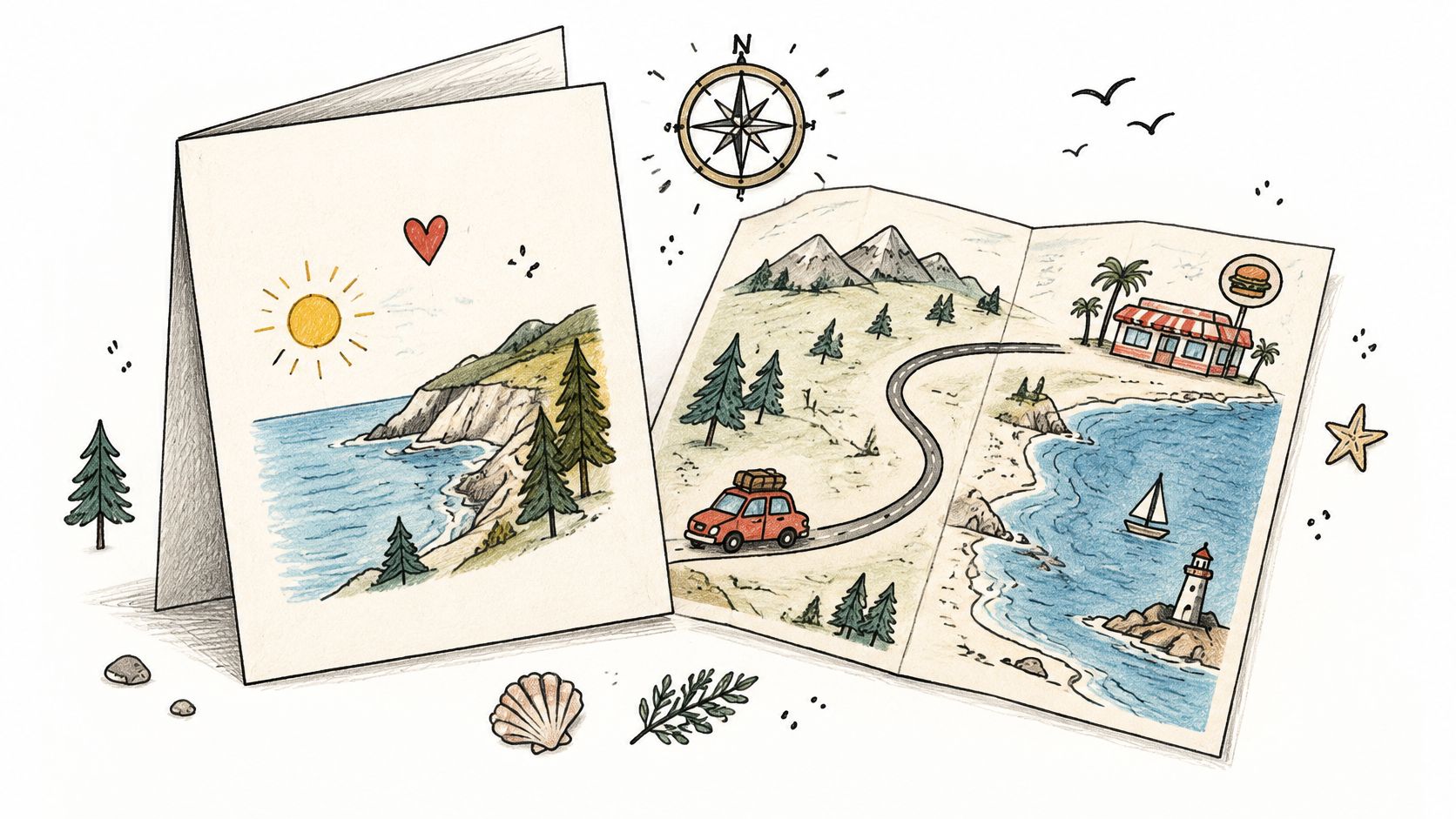
Happy birthday! I still think about our road trip to the coast and the terrible diner we loved anyway. Here's to another year of adventures.
Happy birthday! Thinking of the night we stayed up far too late talking about everything. Wishing you a year as good as that night.
Make It Fit
Choose a memory the recipient would enjoy recalling, not one that embarrasses them in front of family who may read the card aloud. Keep it to one or two details, a place, a food, a line someone said, so the whole note stays at two or three sentences.
This short walkthrough shows how a memory based card comes together before you commit to wording.
Use the Mail This preview to check that the wording fits the panel before approving. If the memory needs a long setup, it's the wrong memory for a card.
2. Gentle Humor Note
Gentle humor works when the joke targets a harmless habit, not the person's body, health, or age anxiety. For a close friend who loses the remote daily, teasing lands. For a coworker you barely know, it reads as a guess.
Happy birthday! You're officially one year closer to the age where you can tell everyone you've been around forever. Enjoy it.
Happy birthday! Another year of being impossibly good at everything, and somehow still not able to find the remote.
Test Before You Send
- Laugh or wince test: Picture them reading it aloud. If they'd wince, cut it.
- Safe topics: Stick to remotes, playlists, cake, and running jokes.
- Unsafe topics: Skip weight, hair, health, and money every time.
Keep the joke to one sentence so the typeset message stays easy to read. If you want more starting points, work through these birthday card message ideas and steal the structure, not the whole line. I'd rather send a mildly funny note that is kind than a sharp one I have to explain later.
3. Heartfelt Gratitude Note
Say thanks for a specific thing and the birthday becomes a reason, not just an occasion. This suits a parent, partner, or friend who rarely hears direct appreciation and might brush off big compliments.
Happy birthday! Thank you for always being the person I can call when things get hard. I'm so glad you're in my life.
Happy birthday to someone who makes everything easier. Thank you for your patience and kindness this year.
Name one concrete example rather than general praise. "Thanks for driving me to that early appointment" feels observed. "You're amazing" could go to anyone.
Length and Tone
Keep the note under about 60 words so it reads comfortably on a 125 × 175 mm card. That's short enough to stay sincere and long enough to include the detail.
Use the approval step to confirm the exact wording before mailing. In a gratitude note, a wrong name or a softened sentence changes the whole meaning, so don't let a draft go out unchecked.
4. Milestone Celebration Note
A milestone note names the number only if the recipient is comfortable with it. Some people want 50 in large letters. Others would prefer you celebrate what they've built and skip the arithmetic entirely.

Happy 30th! Here's to a decade of growing into an incredible person. The best chapters are still ahead of you.
Happy 50th birthday! Congratulations on everything you've built so far. Wishing you a celebration as bright as you are.
Decide on the Number First
Ask yourself whether they've joked happily about the age or gone quiet about it. If you're unsure, focus on achievements or qualities rather than only the number, and let the design carry the celebration.
For a friend retiring the same year, name the work and the next chapter, not just the birthday. If you're stuck on phrasing, these notes on things to write in a birthday card help you separate milestone praise from age jokes. A slightly more celebratory design also signals milestone without forcing the wording.
5. Wish-for-the-Year Note
This style looks forward. A generic "best year ever" could go to anyone. A wish-for-the-year note names what the recipient actually wants: more time outside, a calmer work year, the trip they keep mentioning.
Happy birthday! I hope this year brings you more time outdoors, a few new adventures, and plenty of reasons to laugh.
Happy birthday! Wishing you a year full of good news, good food, and people who make you feel at home.
Choose Three Wishes, Not Ten
Pick two or three wishes tied to what you know they care about. A neighbor rebuilding a garden after a move gets wishes for good weather and weekends to enjoy it. That specificity is what separates a wish from filler.
The style backfires when the wishes read like assignments. "Hope you finally finish the house" nags. "Hope the house feels like home this year" wishes. The same care applies after a hard year: wish for rest, good news, or small pleasures, never for self-improvement.
Keep it to three sentences or fewer so the text sits cleanly on the inside panel of a folded card. A bright or nature themed design pairs naturally with forward-looking words, but keep the text separate and legible.
Physical cards remain a common way people mark birthdays, and a forward-looking wish earns its keep. Written on paper, it can sit on a fridge or desk for months, a small reminder of what someone hoped for them.
6. Short and Sweet One-Liner
Sometimes one sentence is the right call. A group office card, a neighbor you like but don't know well, or a person who dislikes fuss all call for brevity over depth.
Happy birthday! Hope your day is as wonderful as you are.
Wishing you a happy birthday and a year full of good things.
Keep It From Feeling Empty
- Add a real signature: Your name plus a short phrase personalizes a sparse card.
- Match the setting: Use this when the card travels with a group or office gift.
- Mind the layout: A larger, handwritten style typesetting stops one line from looking lost.
Don't pad a one-liner with a second generic sentence just to fill space. White space looks intentional, filler looks uncertain.
Reach matters here too. Roughly 90% of U.S. households purchase at least one greeting card each year, according to Greeting Card Association industry figures, so a brief, warm line is a normal, accepted form. You're not being lazy. You're matching the relationship.
7. Inside Joke Callback Note
An inside joke is the fastest proof of closeness, and the fastest way to confuse everyone else. Use it only when you're certain the recipient will catch the reference in the first three seconds.
Happy birthday! Still waiting on that 'one more episode' we promised ourselves. Here's to another year of excuses.
Happy birthday, to the best partner in crime I've ever had. Let's get into trouble again this year.
Say you and a college friend still say "one more episode" before a late night, that callback does the bonding work for you. You don't need to explain the origin in the card.
Keep the Circle Small
- One sentence callback: Crisp in print, no backstory needed.
- No public embarrassment: Avoid jokes they'd hide from a partner or parent.
- Clear memory: If they might not remember, choose a shared memory note instead.
Practical rule: If the joke needs a footnote, it is not a card joke. Save explanations for a text thread.
This style backfires in group cards and work settings, where other readers feel excluded. Keep it for one to one cards between people who already share the language.
8. Encouraging Motivation Note
Happy birthday! I've watched you train through early mornings and late setbacks, and I'm proud of you. Keep going.
Happy birthday! Whatever this next year brings, I know you'll meet it with the same steady courage you showed all winter.
Use this style when the recipient is in the middle of something: studying, job hunting, recovery, a first year of parenting. A birthday can mark progress without forcing a party mood.
Encourage, Don't Direct
Advice turns a birthday into a review unless they asked for it. "You should apply for that promotion" pushes your agenda. "I've seen how steadily you work" leaves the next move in their hands.
Keep it to two sentences in a folded card. Name one observed detail, praise the effort, offer presence. Skip predictions like "this will be your year" if you cannot know that. The specific detail is what makes encouragement feel personal.
9. Classic Traditional Sentiment
Traditional wording is not a failure of imagination. For extended family, colleagues, acquaintances, and recipients who value formality, a familiar sentiment is respectful and safe.
Wishing you a very happy birthday and all the best in the year ahead.
May your birthday be filled with joy, laughter, and everything you hope for.
Stop It Sounding Generic
Add one personal line or signature after the classic sentence. "Hope you and Maya get that lake weekend this summer" turns a template into a note from you, while the opening keeps the formal register they expect.
Check the preview to confirm the wording is clearly typeset, especially if the artwork is busy. Traditional notes often go to older recipients who will read every word closely, so legibility matters more than flair.
The scale behind this habit is broad. In 2025, birthday cards represented approximately 38.2% of global greeting-card market revenue, according to Ken Research global greeting card market reporting. A classic line, done cleanly, is still the backbone of that category.
10. Thinking-of-You Birthday Note
This is the low pressure option. You're not insisting the day is wonderful. You're saying you remembered, which suits someone grieving, ill, distant, or private about birthdays.
Happy birthday! I was thinking of you today and hoping you have a great one.
Happy birthday. Just wanted you to know I'm thinking of you and hope your day is a good one.
When Quiet Beats Cheerful
Pair this with a simple, understated design and skip balloons and exclamation overload. For a former colleague you haven't spoken to in a year, this reopens contact without false intimacy or a demand to reply.
It also works well for men who prefer straightforward messages without fuss, and for belated cards where heavy apologies would make it about you. Add one sentence of personal wish if the relationship is close.
If this quieter register is what the situation needs, the same principles carry into a dedicated thinking of you card. Acknowledging ambivalence, instead of forcing positivity, is often what makes the note feel honest.
Birthday Card Note Styles at a Glance
| Note Style | Tone | Best For | Ideal Length |
|---|---|---|---|
| Shared Memory Note | Warm and personal | People you share a positive memory with | Two to four sentences |
| Gentle Humor Note | Playful and lighthearted | Casual relationships where the joke will land kindly | Short and punchy |
| Heartfelt Gratitude Note | Sincere and appreciative | Family, mentors, and close friends | Under about 60 words |
| Milestone Celebration Note | Celebratory and affirming | Someone marking a significant age or life milestone | A few personalized sentences |
| Wish-for-the-Year Note | Positive and encouraging | Almost any relationship | Three sentences or fewer |
| Short and Sweet One-Liner | Simple and warm | Coworkers, everyday relationships, or group cards | One sentence or less |
| Inside Joke Callback Note | Playful and affectionate | Someone who shares the joke or phrase | Brief, usually one sentence |
| Encouraging Motivation Note | Supportive and uplifting | Someone pursuing a goal or navigating a transition | A few warm, simple sentences |
| Classic Traditional Sentiment | Warm and conventional | Colleagues, acquaintances, or extended family | Short and easy to read |
| Thinking-of-You Birthday Note | Relaxed and genuine | Distant friends or relatives, or someone who prefers low-key celebrations | Brief |
From Chosen Words to a Card in the Mail
Don't start by writing. Start by choosing one style from the list above, then adapt one example with a detail only you would know. A shared memory for a close friend, gratitude for a parent, a one-liner for a coworker, a thinking-of-you line for someone having a hard year. That single decision fixes tone, length, and content at once.
Keep your final note to three or four sentences. In a folded card, that length gives you room for a greeting, one specific detail, a wish, and your name, without shrinking the type or crowding the panel. If your draft runs to six sentences, cut the most generic one first. It is almost always the sentence that could go to anyone.
Read the draft once for risk, not style. Check the name spelling, any age you mention, and whether a joke still sounds kind on paper. Paper has no tone of voice to rescue a borderline line, and the recipient may keep the card or show it to others. If a sentence needs your facial expression to make sense, rewrite it plainly.
Then make the sending concrete. With Mail This, you approve the exact wording and address before anything ships. Your card is then printed by Cardly and mailed within the US, as a personalized folded card at a fixed $9.99 including the envelope and domestic postage, plus applicable tax shown before purchase. You write and edit the inside message yourself, review the full preview, and only then pay.
That approval first step matters because the highest risk points are not creative. They are a mistyped name, an address error, or text that looked fine in a draft but reads poorly in print. Independent typesetting keeps your approved words legible and separate from any artwork, so what you sign off is what gets mailed.
The broader habit supports taking this small step seriously. In 2025, the global greeting-card market was valued at approximately $19.8 billion, according to Grand View Research greeting cards market analysis. People still buy, keep, and mail paper cards because a physical note does something a quick message doesn't. It arrives, it sits on a counter, and it says you bothered.
So pick one style, add one specific detail, and approve a short note you can stand behind. That's a birthday card note that feels personal without sounding manufactured.
Turn the style you picked into a real folded card without a trip to the store. Choose a birthday design, edit the exact inside message, approve the preview and address, and we'll print and mail it within the US for $9.99 including envelope and domestic postage. Start your card today at Mail This and send words you've checked, not words you're hoping turned out right.