You're standing in the card aisle with a card you know they'll like, but you still don't know what to write inside. Or you're staring at a blank draft late at night, deleting anything that sounds too formal, too mushy, or suspiciously like something you sent last year.
The blank space inside the card is harder than it looks. You want to say something real without turning a birthday greeting into a speech.
When a birthday card falls flat, the problem usually isn't the artwork. It's a message that could have gone to anyone. A beautiful cover can't make Have an amazing day feel personal on its own.
The most useful things to write in a birthday card start with something you know well: a shared memory, a thoughtful habit, a running joke, or a plan you'd like to make together. You don't need a dramatic story. Remembering how someone takes their coffee can be more convincing than calling them extraordinary.
Match the warmth to the relationship you have, not the relationship you think a birthday card should describe.
These nine message types include copy-ready examples, practical writing tips, and a quick check before sending. Choose the one that fits how you normally talk to this person. Then add a detail they'll recognize.
Table of Contents
- 1. Shared Memory Callback
- 2. Specific Appreciation
- 3. Inside Joke or Light Humor
- 4. Hopes for the Year Ahead
- 5. Positive Milestone or Age Reflection
- 6. Original Short Verse
- 7. Quotation with Personal Context
- 8. Encouragement for a Current Goal or Challenge
- 9. Invitation to Reconnect or Celebrate Together
- How the Nine Birthday Card Message Types Compare
- Choose One Message and Make It Specific
1. Shared Memory Callback
A shared memory works especially well for a close friend, sibling, or partner. It gives you something personal to say without reaching for a grand declaration.
Choose a moment you both enjoyed. A missed train that became a favorite afternoon is useful material. A disastrous date they'd rather forget isn't.
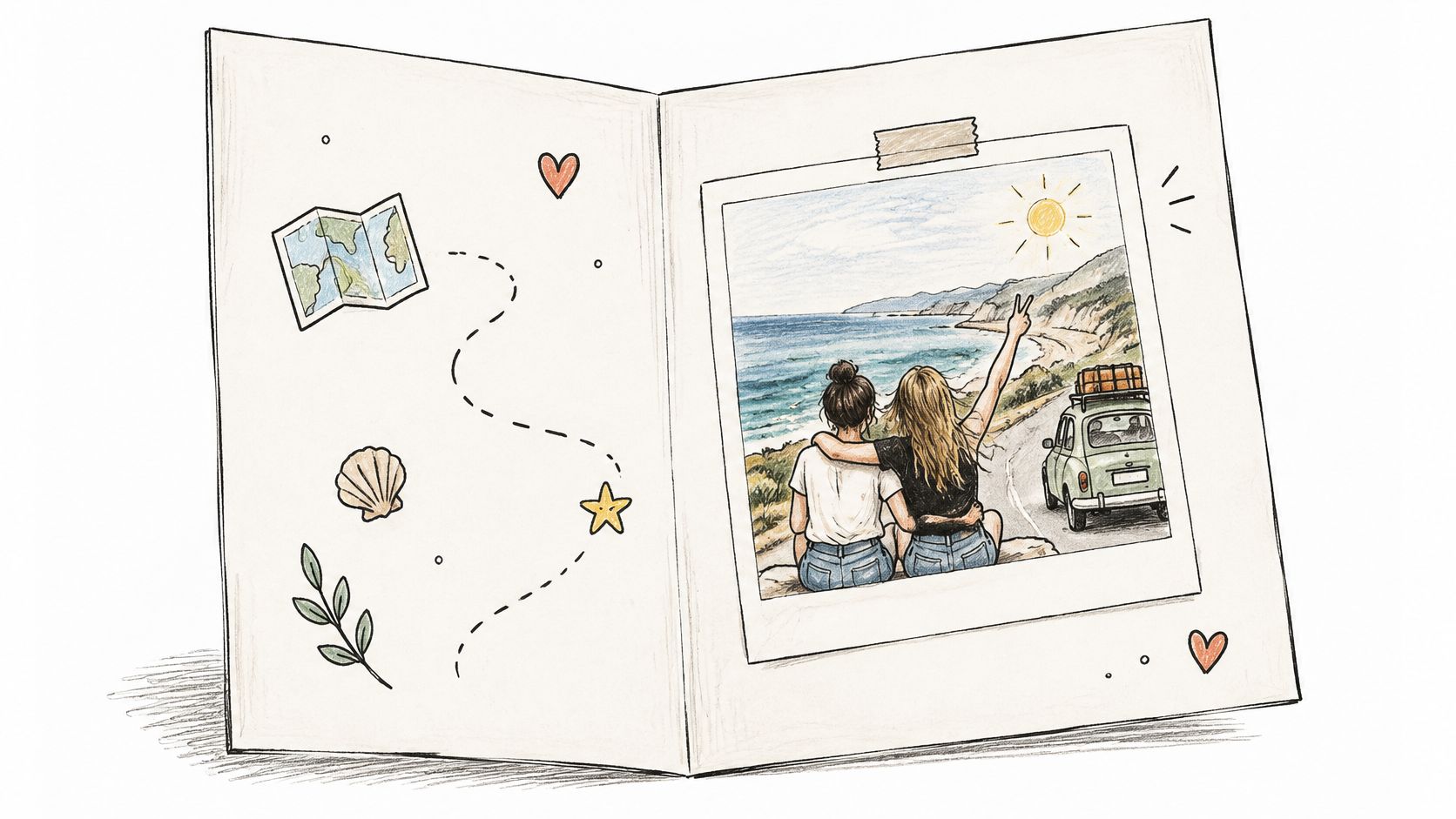
Turn the Memory Into a Birthday Wish
For a friend who loves traveling with you:
I still think about that rainy drive to the coast and the diner with the excellent pancakes. Even our wrong turns turn into good memories. Happy birthday, and here's to another adventure together.
For a sibling, an ordinary childhood detail can do more than a sweeping tribute:
Happy birthday to my original backyard camping partner. I'm still grateful you let me retreat indoors when the bugs arrived. Love you, and I hope today includes your favorite cake.
Keep enough detail to make the memory recognizable, then return to the recipient. Don't spend the whole card retelling a story they already know.
If you're choosing between sentimental and silly, these birthday card ideas for a best friend can help you find the right direction.
Before sending: Would they happily tell this story themselves? If the memory involves embarrassment, an ex, or private family trouble, choose another. Personal doesn't have to mean revealing.
2. Specific Appreciation
Replace general praise with something the recipient does. You're wonderful is pleasant. You always make room for the quiet person at dinner shows attention.
This approach suits parents, helpful neighbors, colleagues, and friends who might feel awkward receiving a highly sentimental message. You can be warm without claiming a closeness you don't have.
A 2023 survey of 2,000 U.S. adults reported that 55% favored personalized messages, according to Two Sides reporting published by WhatTheyThink. Give that personalization substance by naming an action, not just inserting a name.
- For a parent: Happy birthday, Dad. Thank you for answering my repair questions without making me feel silly for asking. Your patience means a lot. I hope today includes some uninterrupted time in the garden.
- For a colleague: Happy birthday, Priya. I appreciate how clearly you explain things and how generously you share what you know. Wishing you a lovely day and time for something you enjoy.
- For a neighbor: Happy birthday! Your friendly wave always makes the street feel more welcoming. I hope you have a wonderful day.
For workplace wording, use birthday card wishes for a coworker to keep appreciation friendly rather than overly intimate.
Before sending: Remove anything that sounds like a performance review. Praise their kindness, not their usefulness to you, and finish with a wish that belongs to them.
3. Inside Joke or Light Humor
A joke is a good opening when humor already belongs in the relationship. It's a poor shortcut when you're unsure what else to say.
Use it for the friend who trades trivia insults with you or the partner who shares your ongoing argument about loading the dishwasher. Don't assume that being siblings makes every subject fair game.
Humorous birthday cards were the most popular type in the 2024 Gift Book Consumer Survey, selected by 74% of consumers, as reported by Gifts & Decorative Accessories. Popularity still doesn't tell you whether a particular joke will land.
Make the Situation the Target
For your regular trivia teammate:
Happy birthday! Your confidence in the geography round remains completely unsupported by the results. I'm delighted you're on my team anyway.
For a partner who shares your takeout indecision:
Happy birthday to my favorite person to discuss dinner with until every restaurant closes. I love our ridiculous little life together.
A good birthday joke lets the recipient laugh with you. It doesn't ask them to prove they can take an insult.
Avoid jokes about appearance, money, fertility, drinking, or family tension. Even familiar teasing can sound sharper in print without your voice and expression.
Before sending: Read only the joke, without the affectionate closing. If it sounds mean on its own, soften it. Add a sincere birthday wish so the teasing isn't your entire message.
4. Hopes for the Year Ahead
When you don't have a useful memory or an established joke, write about something the recipient looks forward to. This is a comfortable choice for a cousin, newer friend, or partner's family member.
The trick is to offer a wish, not assign homework. I hope you get more time to paint feels different from This is the year you finally need to pursue your talent.
Wish for Their Kind of Good Year
For a friend who has mentioned wanting quieter weekends:
Happy birthday. I hope this year brings you slow mornings, good books, and more weekends that actually feel like a break.
For a cousin who loves exploring:
Wishing you a birthday full of good company and a year with plenty of new trails to explore. I look forward to hearing about your next favorite spot.
For someone you barely know:
Happy birthday! It's been lovely getting to know you at the neighborhood garden. Wishing you a happy year and plenty of things to look forward to.
Stay with preferences they've expressed. Don't wish someone a new romance, a baby, a promotion, or a house unless you know they want that conversation.
Before sending: Could your wish imply that their current life isn't good enough? Replace predictions and improvement language with something they'd enjoy. If you don't know their goals, a warm wish for enjoyable days is enough.
5. Positive Milestone or Age Reflection
Mention a milestone when the recipient welcomes it. Leave the number out when you're unsure.
For a parent or longtime friend, the strongest reflection celebrates who they are now. It doesn't turn the card into an inventory of everything they've achieved or suggest their interesting years are behind them.
A peer-reviewed content-analysis study of 48 children's birthday cards evaluated wording and design independently across seven-point scales, including humor, intimacy, friendliness, brightness, and meaningfulness. For your own writing, treat visual style and emotional tone as separate decisions: a cheerful design doesn't make an unwanted age joke kinder.
Celebrate the Person, Not an Age Stereotype
For a parent who enjoys marking the occasion:
Happy milestone birthday, Mom. I love your curiosity, your generous table, and your willingness to try something new. I'm glad we get to celebrate you.
For a friend who's uncomfortable with the attention:
Happy birthday. No grand speech from me, just gratitude for your friendship and a wish for more of the things you love this year.
Avoid compliments that depend on denying age. Telling someone they look good for their age introduces an insult they didn't need.
If you need a different level of warmth, these birthday card message ideas offer other starting points.
Before sending: Check that you know the recipient's preference about mentioning age. Also ask whether your message celebrates their present life, rather than only praising what they've done for everyone else.
6. Original Short Verse
Short verse works for a child, a playful partner, or a friend who enjoys handmade touches. It's less suitable for a reserved colleague unless you know they like this style.
Start with a recognizable detail and use ordinary words. A slightly uneven rhythm is easier to forgive than a sentence nobody would ever say.
Keep the Personal Detail
For a child who loves dinosaurs:
May dinosaurs stomp through your dreams tonight,
And birthday candles glow warm and bright.
With books to explore and games to play,
I'm sending you love on your birthday.
For a friend who shares your love of gardening:
For muddy boots and seeds to sow,
For all the little things you grow,
For tea together when work is through,
Happy birthday, wonderful you.
A brief video can offer a creative pause while you work on your wording.
Read your draft aloud at a normal pace. If you have to stretch a word, change your pronunciation, or rush the ending to make it rhyme, revise the line. You can also abandon rhyme and keep the affectionate detail.
Before sending: Check the actual card layout, not just the draft in your notes. Preserve deliberate line breaks, use readable text, and shorten the verse rather than shrinking the lettering until it's uncomfortable to read.
7. Quotation with Personal Context
A quotation works best when it already means something to the recipient. Think of a line from their favorite book or a saying they use, rather than an impressive statement found on a quote graphic.
This approach suits a book-loving friend, a parent with a familiar expression, or a partner who shares your favorite film. The personal connection matters more than the name attached to the words.
Let Your Own Note Do the Work
For a friend who loves rereading a particular novel, copy a brief passage from your own edition. Beneath it, add:
This passage always reminds me of our long conversations about starting over. I'm grateful for your company through every change. Happy birthday.
For a parent with a familiar birthday toast, reproduce their actual words, then write:
You've said this at so many family celebrations that I can practically hear your voice reading it. Today it's my turn to celebrate you. Happy birthday, Dad.
- Verify the wording: Check the book, recording, or original publication rather than copying a social media attribution.
- Explain the connection: Say why this line belongs in this person's card.
- Keep your voice present: Don't let the borrowed passage replace your own birthday wish.
Before sending: If you can't verify the quotation, leave it out. Write the underlying sentiment in your own words without quotation marks or attribution. A straightforward personal sentence is better than a doubtful famous quote.
8. Encouragement for a Current Goal or Challenge
A birthday card can acknowledge someone's real life without becoming a progress report. This works for a close friend starting a job, a sibling studying for an exam, or someone facing a difficult year.
Ask whether they'd welcome the subject today. They may want encouragement, or they may want a birthday that isn't about work, illness, or loss.
Offer Support Without Predicting the Outcome
For a sibling starting a new role:
Happy birthday! I've loved hearing your excitement about the new job. I'm cheering you on, and I hope this year leaves room for good things outside work too.
For a close friend having a painful year:
Thinking of you on your birthday and sending love. There's no pressure to make today anything in particular. I'd be glad to bring dinner or sit with you if you'd like company.
For a colleague, keep private circumstances out:
Happy birthday. Wishing you an enjoyable day and some welcome time to yourself.
Support doesn't require a forecast. You can care about someone without promising that everything will work out.
Avoid instructions to stay positive and praise that requires them to keep being strong. Don't name a diagnosis, breakup, or financial problem in a card that others might read.
Before sending: Check every offer against what you can realistically do. A manageable offer of dinner is more useful than an unlimited promise of help you can't sustain.
9. Invitation to Reconnect or Celebrate Together
We should catch up is friendly, but it leaves the recipient to organize everything. A better invitation names something you'd both enjoy and makes it easy to respond.
Use this for an old friend, a nearby relative, or someone you haven't seen lately. Keep it separate from any complaint about how long they've been out of touch.
For a friend you miss:
Happy birthday! I miss our coffee-and-bookshop afternoons. I'd love to take you for coffee when you have a free weekend. I'll text you and we can find something that works.
For a cousin who lives farther away:
Happy birthday! I'd love a proper catch-up call whenever you have some breathing room. I hope today includes good food and something that makes you laugh.
Make the Invitation Easy to Accept
- Offer something familiar: Suggest coffee, a walk, or a call rather than an elaborate outing they may not want.
- Leave room to decline: Make clear that the birthday wish doesn't depend on accepting.
- Take responsibility for follow-up: Send a text or call instead of expecting the card to settle the details.
A mailed card isn't a reliable way to arrange a time-sensitive event. Send a separate invitation if the celebration requires a firm date or response.
Before sending: Remove guilt about missed calls or canceled plans. The invitation should feel like something pleasant you're offering, not a relationship debt they need to repay.
How the Nine Birthday Card Message Types Compare
| Item | Best For | Tone | Main Risk |
|---|---|---|---|
| Shared Memory Callback | Close relationships with a recognizable shared memory | Personal and nostalgic | The memory may be unclear or unwelcome |
| Specific Appreciation | Anyone you genuinely value | Sincere and thoughtful | Praise may feel insincere if too general |
| Inside Joke or Light Humor | People who share your sense of humor | Playful and casual | A joke may confuse or hurt |
| Hopes for the Year Ahead | Almost any relationship | Uplifting and optimistic | Wishes may sound generic or presumptuous |
| Positive Milestone or Age Reflection | Milestone birthdays and longtime relationships | Celebratory and respectful | Age references may feel sensitive |
| Original Short Verse | A recipient who would enjoy a creative message | Warm and imaginative | Forced rhymes or awkward meter |
| Quotation with Personal Context | Someone who appreciates meaningful quotes | Inspirational and personal | The quote may be overused or misattributed |
| Encouragement for a Current Goal or Challenge | Someone facing a known goal or transition | Supportive and reassuring | Mentioning a challenge may feel intrusive |
| Invitation to Reconnect or Celebrate Together | Someone you want to spend time with | Warm and inviting | Plans may not be followed through |
Choose One Message and Make It Specific
The best card line is one that feels right for this particular person. That doesn't mean every sentence has to be unique. A familiar birthday wish becomes personal when you connect it to a true detail and use a tone the recipient recognizes.
You also don't have to fit your whole relationship into the card. Choose something small enough to say clearly. A remembered afternoon, a thoughtful habit, or a wish for more gardening time can carry the message.
Turn a Rough Idea Into Approved Wording
Use this simple routine before choosing artwork or polishing sentences:
- Pick the relationship: Decide how much warmth is natural between you. A close sibling can receive explicit affection; a new neighbor usually needs friendly, straightforward wording.
- Choose a message type: Use a memory, appreciation, joke, wish, reflection, verse, quotation, encouragement, or invitation. Don't force several approaches into the same card.
- Add a real detail: Include something you remember, have observed, or have been told. Don't invent shared history to make the message sound more intimate.
Say your rough idea is that a colleague helped you settle into a new team and likes hiking. Your finished message could be:
Happy birthday, Maya. Thanks for making me feel welcome and patiently answering my questions. I hope this year brings you plenty of time on your favorite trails.
That's warm without claiming a deep friendship. It includes appreciation and a personal wish without turning the birthday into a work conversation.
If you use an assistant, provide those facts and set boundaries. Ask for friendly, understated wording, no invented memories, and no jokes about age. Treat the result as a draft, then replace any phrase you wouldn't naturally say.
Read the Card as the Recipient
Read the final text aloud during the approval step. Check the name, sign-off, punctuation, and line breaks, then ask whether every claim is true and every reference is welcome. Keep the wording separately typeset from the artwork so the approved message stays clear.
Mail This offers an assistant-led drafting process and a final preview before payment. Use that preview to approve the exact wording, design, and destination, rather than assuming your first draft is ready to print.
Mail early to give the card a better chance of arriving close to the birthday. Mail This doesn't guarantee delivery dates, so send time-sensitive plans separately. The card's job is simpler: make someone feel remembered, without asking them to decode what you meant.
Mail This turns a short, thoughtful idea into a personalized physical greeting card, with a preview-and-approval flow before printing and mailing to supported U.S. destinations. Bring a memory, a specific thank-you, or a birthday wish to Mail This, refine the wording until it sounds like you, and approve the finished card before it goes out.