Your friend has gone quiet after a hard diagnosis. You've opened your messages, typed a question about how they're doing, then deleted it because answering might feel like another task. You want them to know you're still there, without asking them to reassure you.
A thinking of you card gives you a way to say that. Someone has chosen a design, written a note, and arranged for it to arrive. The recipient can open it when they're ready, keep it nearby, or put it away without replying.
The right choice depends less on the prettiest cover than on your relationship, their situation, and the distance between you. Mail This helps turn an uncertain idea into a personalized card. Hallmark suits familiar encouragement, while Postable makes ongoing contact easier to organize. Cardly offers more creative control, Kind Post handles sensitive group support, TouchNote puts shared photographs first, and Lovepop adds a small-gift feel.
Start with what the person needs from you, then choose the tool that makes that gesture manageable.
Table of Contents
- 1. Mail This
- 2. Hallmark
- 3. Postable
- 4. Cardly
- 5. Kind Post
- 6. TouchNote
- 7. Lovepop
- How the leading thinking of you card options compare on price, best use, and mailing
- Match the Card to the Moment and Send It This Week
1. Mail This
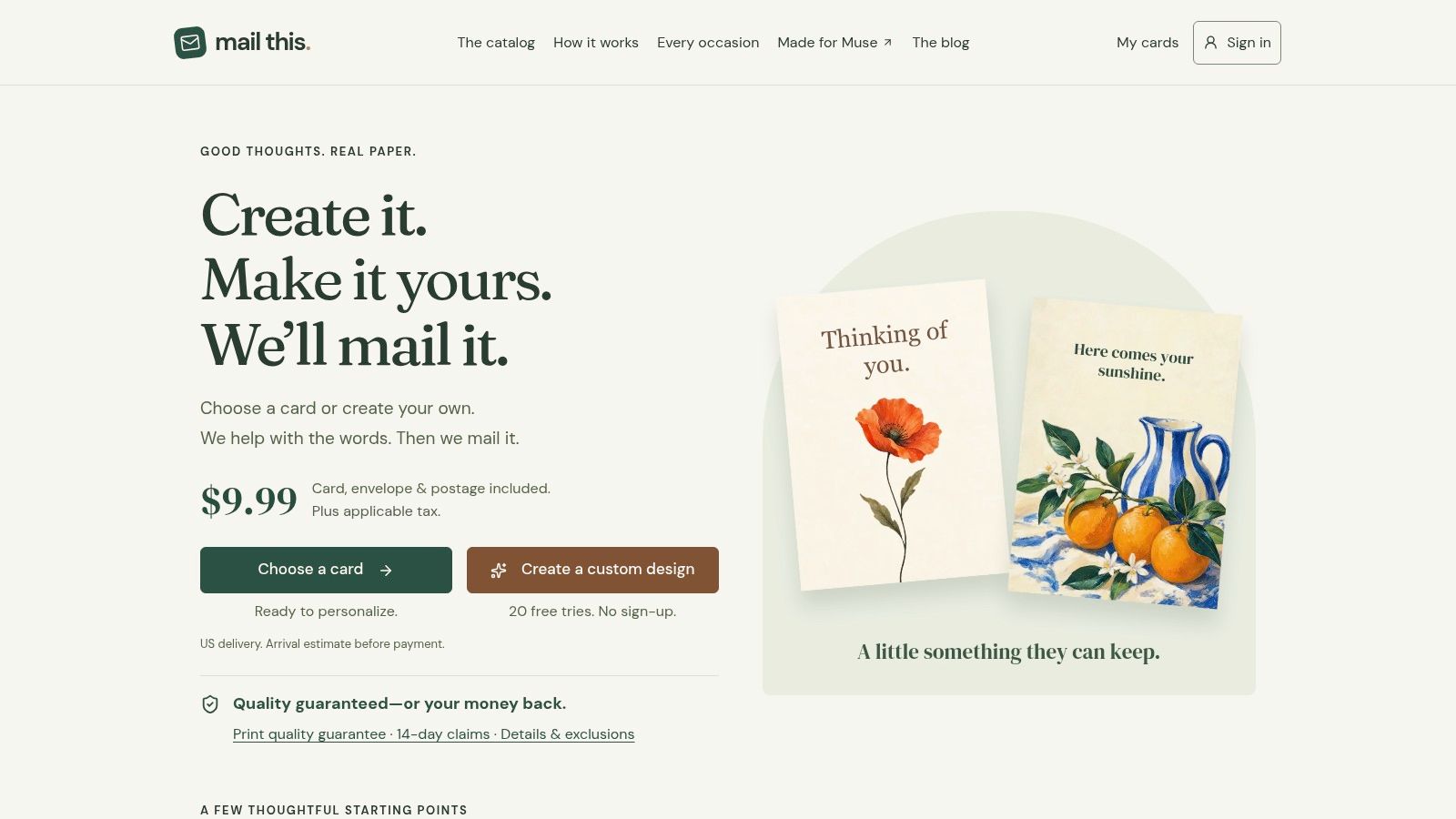
Best for a friend recovering from surgery when you know what you mean but can't find the words.
Mail This turns a short idea into a personalized folded greeting card, then handles printing and mailing through Cardly. Start with a catalog design or upload a photograph; AI-assisted wording and artwork can help when a blank card feels harder than it should.
The useful distinction is control over the finished message. Your wording is typeset separately from the artwork, and you review the complete card, destination, and total before approving the order. That matters when a misplaced word could turn gentle encouragement into unwanted advice.
Keep the Message Smaller Than the Situation
For someone recovering from surgery, skip predictions about how quickly they'll feel better. Acknowledge the present and offer something you can actually do.
Sample message
Thinking of you while you recover. There's no need to reply. I can leave dinner at your door if that would help, and I'll check by text before bringing anything.
Use the writing assistant to shorten or soften your draft, not to invent intimacy. Replace generic encouragement with a detail that belongs to your friendship, such as their favorite soup or the show you're both watching.
- What works: Photo uploads, assisted drafting, and a full preview reduce the effort of creating something personal.
- What needs attention: Read every generated sentence and inspect the artwork. Avoid medical imagery or recovery slogans unless you know they'd welcome them.
- Sending tip: Confirm address eligibility before designing. Delivery coverage has exclusions, and arrival windows are estimates rather than promises.
Mail This is a stronger fit for personal support than a time-critical announcement. If you're deciding whether the moment calls for a mailed card or an online greeting, this guide to Paperless Post alternatives helps clarify the format choice.
2. Hallmark
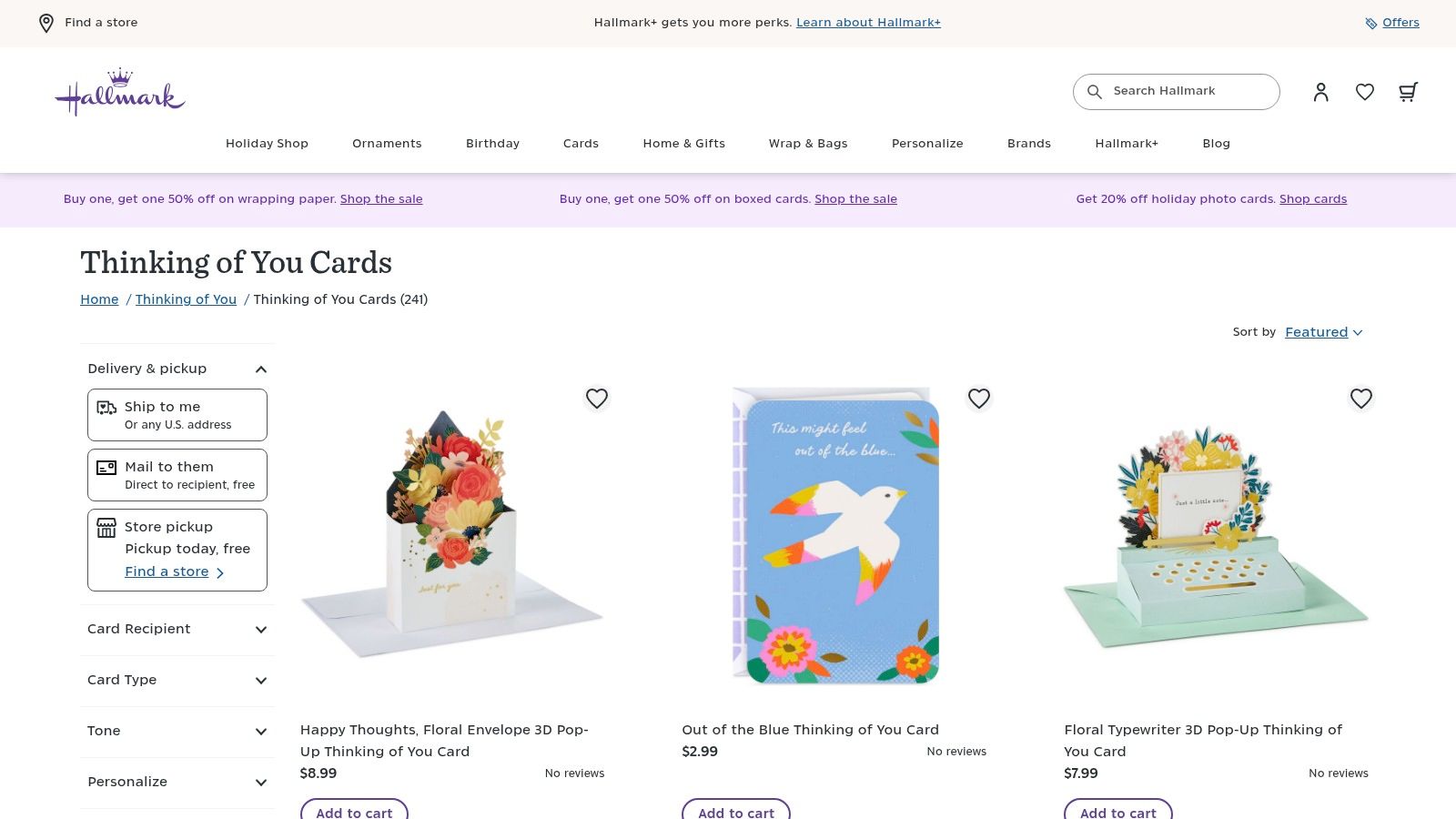
Best for encouraging a parent or relative who appreciates a familiar, traditional card.
Not every recipient wants custom artwork. For a parent having a lonely stretch, a familiar floral card with a straightforward personal note may feel more comfortable than a highly designed creation.
Hallmark's thinking-of-you collection offers encouraging, funny, religious, photo, and pop-up options. Eligible designs support Sign & Send, so you can personalize the card and have it mailed without handling the envelope yourself.
Choose Their Tone, Not Yours
A funny card works when humor is already part of the relationship. Religious wording works when it reflects the recipient's beliefs, not just because you're struggling to find something reassuring.
Sample message
I passed the garden center and thought of our trips to choose plants together. I wish I could join you for a cup of tea today. I'll call when we usually catch up.
A familiar card becomes personal through the detail you add, not through a longer printed verse.
Hallmark's advantage is the range of ready-made tones. The trade-off is that a polished verse can sound more emotionally expansive than your relationship is.
Sending tip: Read the cover and inside together before adding your message. Check whether the design supports Sign & Send, and don't assume direct mailing includes tracking. If you need to know exactly when something arrives, keep that expectation separate from the card.
3. Postable
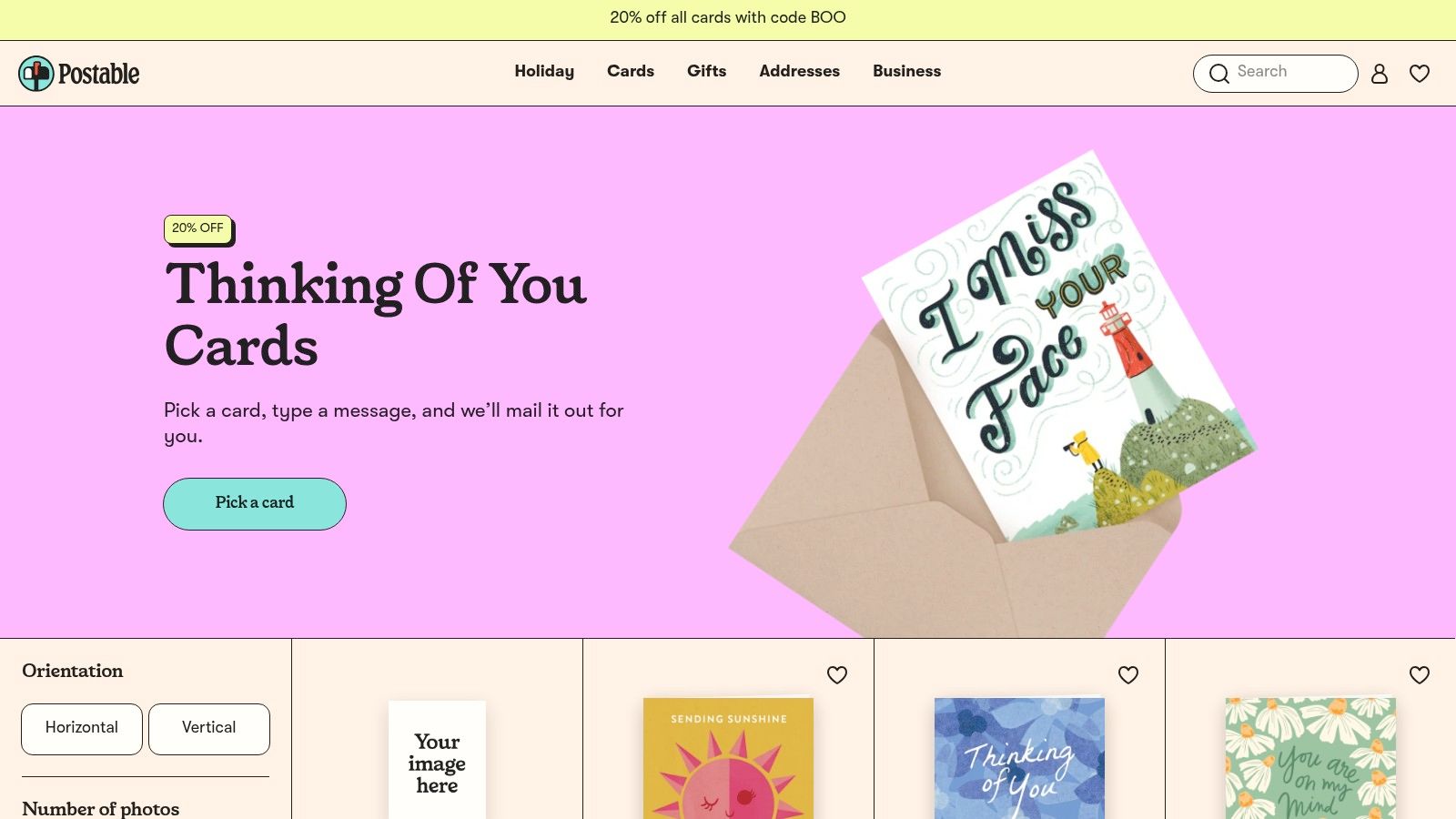
Best for staying connected with a sibling who's moved abroad.
Moving away creates plenty of occasions that don't have names: the first lonely weekend, missing a family meal, or finally settling into an unfamiliar apartment. A card doesn't need to mark a celebration to be welcome.
Postable lets you write online while it handles printing, addressing, stamping, and mailing. Its address book and scheduling tools make it useful when staying in touch is an ongoing intention rather than a spontaneous purchase.
- Choose the design: Pick an illustration or joke your sibling would recognize, rather than a generic travel theme.
- Style the message: Handwriting-style fonts can soften the appearance, but prioritize readability over elaborate script.
- Plan the send: Confirm that the destination is supported and check the available mailing estimate before ordering.
Sample message
Making pasta reminded me of our chaotic Sunday dinners. I miss having you nearby, but I'm glad you're building a life that feels right for you. Tell me about your neighborhood whenever you feel like it.
Postable's practical strength is organization. It's less suitable when you need immediate delivery or expect to change the order after submitting it.
Sending tip: Ask for the complete local address exactly as your sibling uses it, including apartment details and postal formatting. Don't guess from an old message or translate street names yourself.
For private family news, choose a folded card rather than an exposed format. The message should feel like contact, not a request for a progress report.
4. Cardly
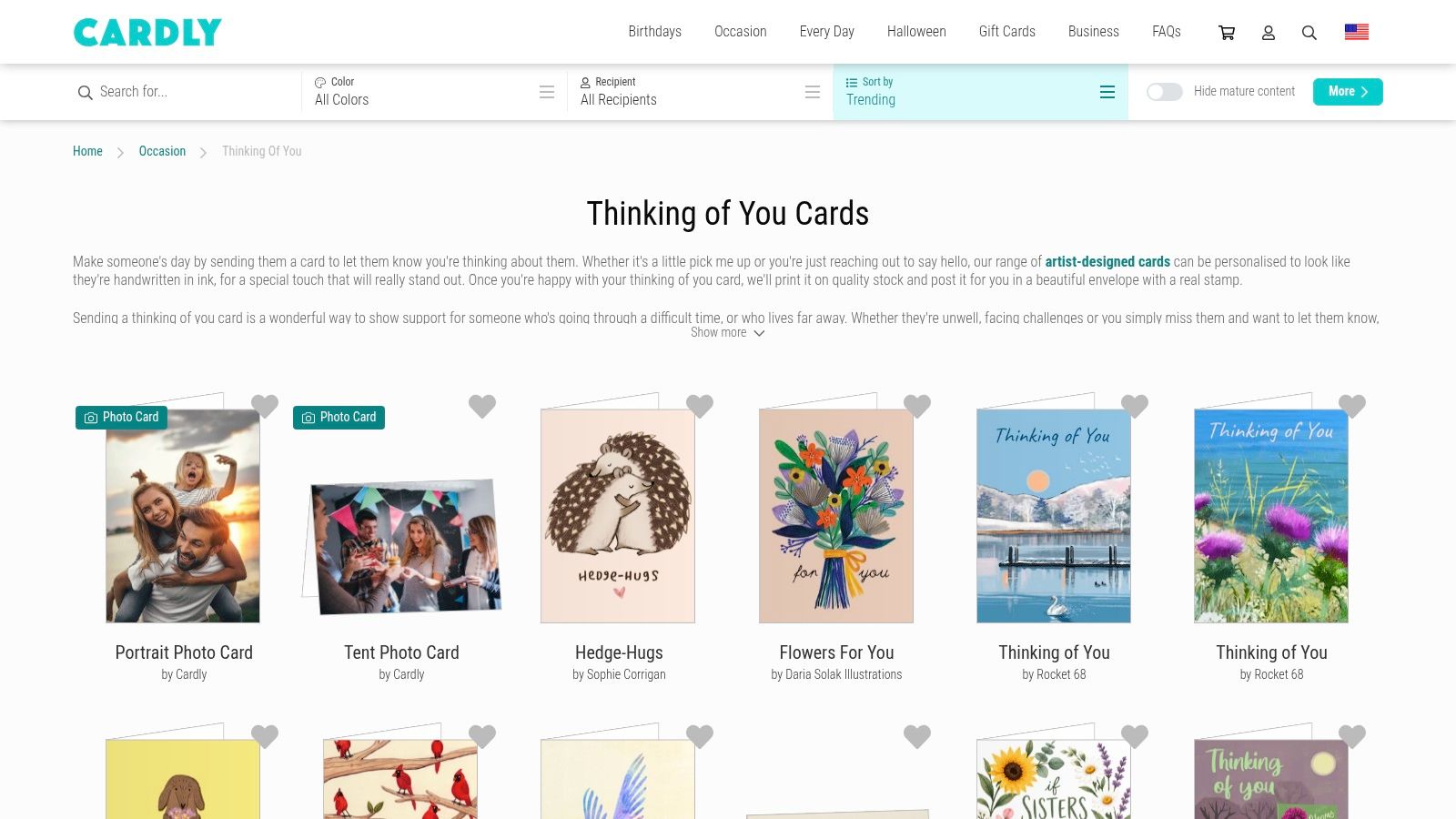
Best for a creative friend who's had a disappointment and would dislike a motivational speech.
Say your friend didn't get the role they wanted or had a project rejected. They may appreciate something visually distinctive, but not a card insisting that everything happens for a reason.
Cardly combines artist-designed cards with customizable message styling, doodles, and photo uploads. It handles printing and mailing, making it a useful middle ground between choosing a standard card and designing everything yourself.
Personalize Without Overdecorating
Choose artwork that matches their taste, then leave the message room to breathe. A small doodle connected to an inside joke can work better than a crowded page of decorative elements.
Sample message
I know you put a lot into this, and I'm sorry it didn't work out. You don't need to turn it into a life lesson for my benefit. I'm here for a walk, a distraction, or a proper complaint.
The advantage is creative flexibility without starting from a blank canvas. The risk is spending so long adjusting fonts and embellishments that you avoid writing the honest sentence.
Sending tip: Preview the message at a comfortable reading size and check the displayed currency, destination, and mailing options before checkout. Handwriting-style text should still be easy to read.
If you're unsure what deserves customization, this guide to a custom greeting card can help you separate meaningful personal details from decoration. Choose Cardly for its artist-led style, not because the message needs to look handwritten to count.
5. Kind Post
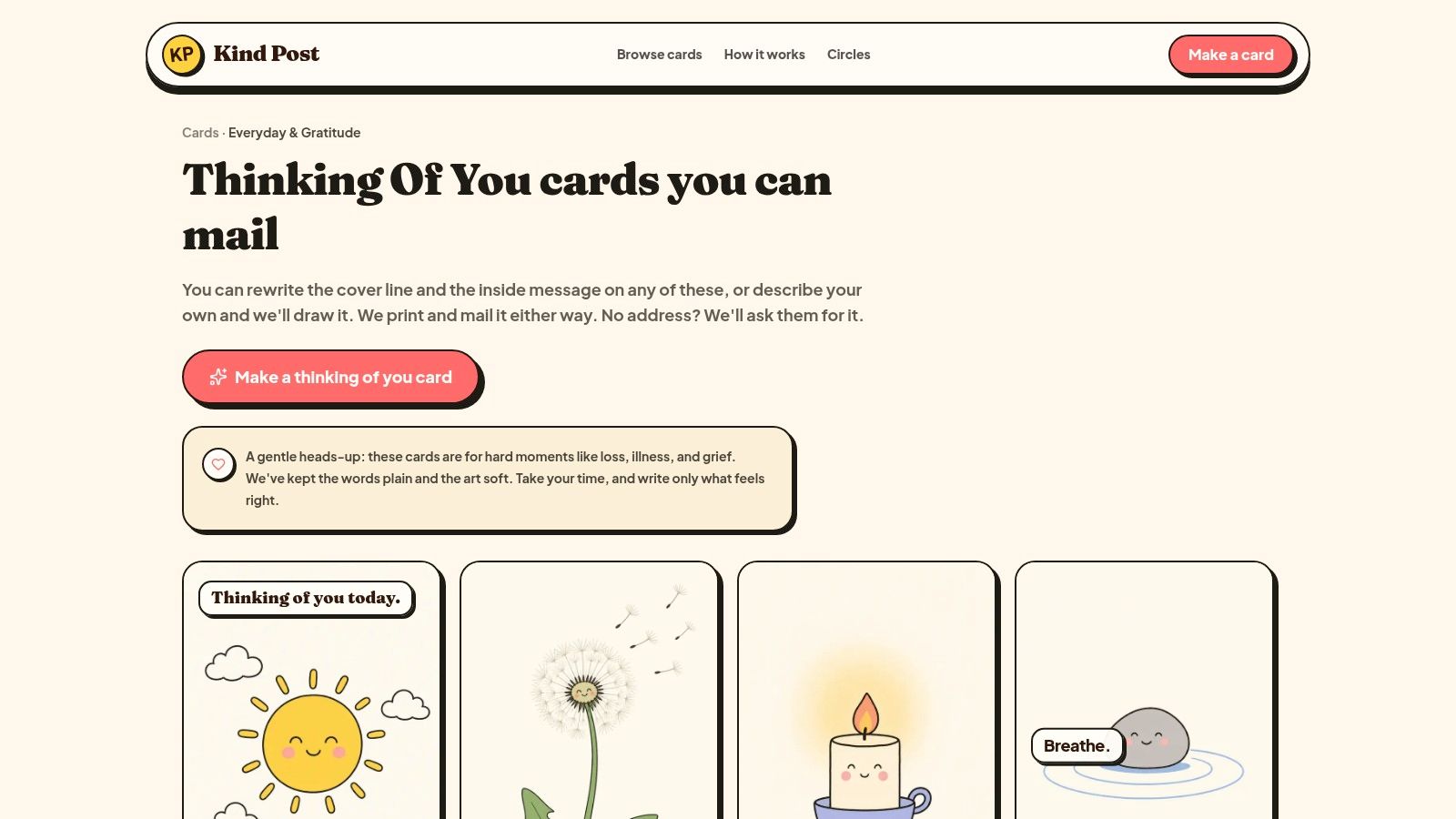
Best for supporting a colleague after a loss, especially when several people want to contribute.
Workplace sympathy requires restraint. You may care about a colleague without knowing their family, beliefs, or preferred level of privacy, and the card shouldn't pretend otherwise.
Kind Post focuses on supportive cards for difficult moments. It supports group messages, editable wording, a digital copy, and a private address-request option when you don't have the recipient's mailing details.
Sample message
We're thinking of you and are sorry for your loss. There's no need to reply to this card. We'll keep work questions with your manager so you have space.
Only include that last sentence if the team has agreed to it. Practical reassurance becomes unhelpful when nobody has arranged the promised support.
Practical rule: A group card should offer support without turning someone's grief into an office-wide conversation.
- What works: Contributors can add personal notes, and an address request can preserve the recipient's privacy.
- What doesn't: Asking the recipient to organize the group card or explain their loss creates more work.
- Sending tip: Appoint a coordinator to review the messages for accidental pressure, intrusive questions, or conflicting promises.
The focused selection suits tender situations better than broad humor or casual celebration. Requesting an address also adds a step, so use an existing appropriate address when you already have permission to send personal mail there.
Keep the note warm but proportionate to the relationship.
6. TouchNote
Best for reminding a distant friend of an ordinary good day together.
A photograph of an uneven picnic spread or a rain-soaked walk can say more than a polished scenic shot. The strongest image is usually the one that prompts recognition, not the one that would win a photography contest.
TouchNote offers photo-personalized cards and postcards, allowing you to pair a shared memory with a short message. It's a practical option when you already have the image and don't need help inventing a visual theme.
Let the Photograph Do Some Work
Choose a photograph with a clear subject and check the crop before sending. Faces near the edge can disappear when the image is fitted to the card, while a busy background can make an already small subject hard to recognize.
Sample message
Found this photo from our windy beach walk and remembered how determined we were to eat lunch outside. I miss those ordinary afternoons with you. No big news here, just thinking of you.
- Choose a postcard: Use it for light, everyday contact that doesn't contain sensitive details.
- Choose a folded card: Use it when the message is personal or the recipient might want to display the photograph without displaying the note.
- Check the preview: Make sure the image looks clear and that the text remains easy to read.
TouchNote's appeal is the shared memory. It's less useful if finding a suitable photograph becomes the reason you keep postponing the card.
Sending tip: Avoid embarrassing images or photographs of other people that the recipient wouldn't want displayed. Check destination availability and the mailing estimate rather than assuming a fixed arrival date.
7. Lovepop
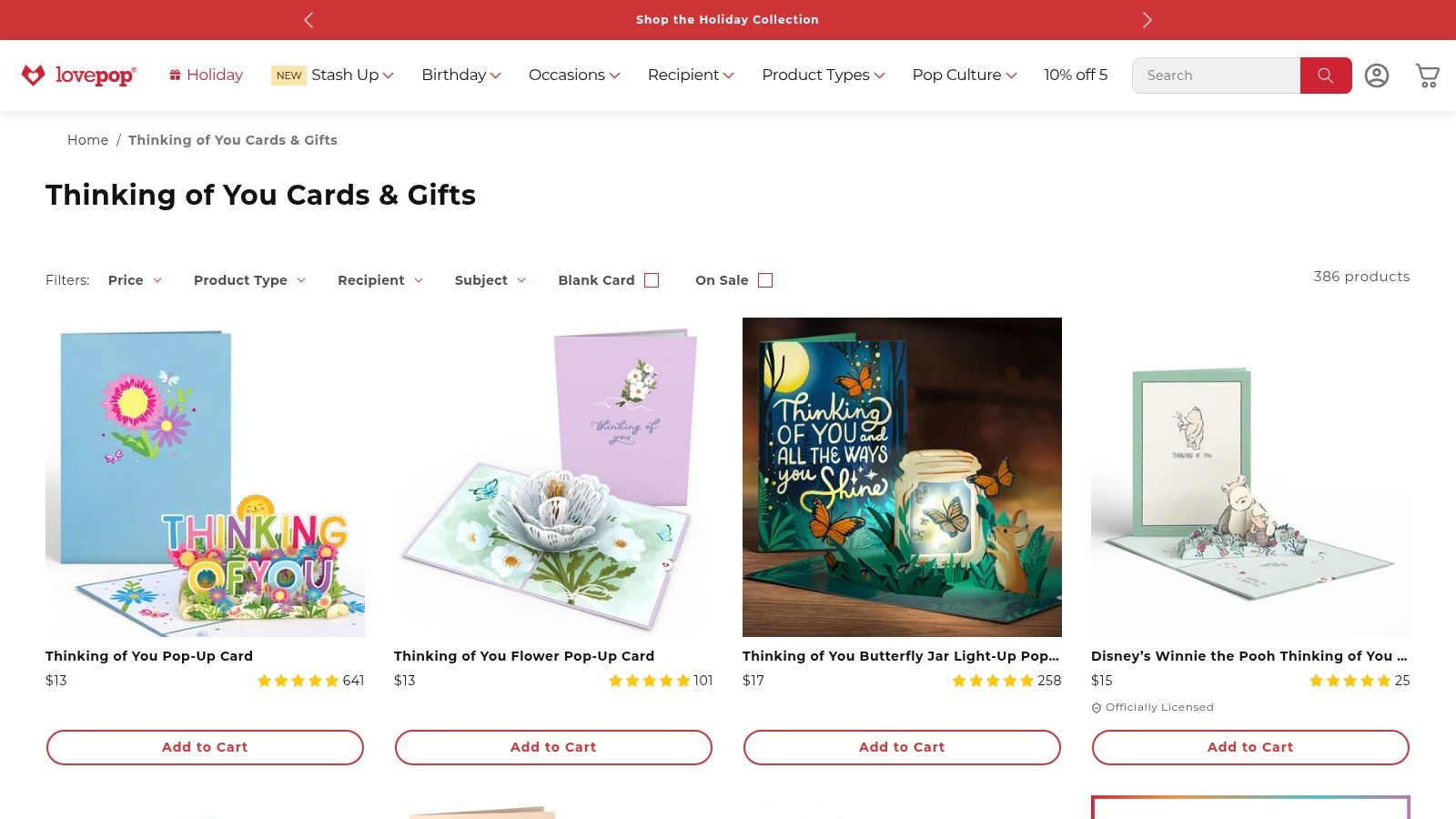
Best for a friend facing a difficult transition who'd enjoy a small gift without the fuss of a delivery.
A friend going through a divorce or settling into a new home may not want a celebration. They might still enjoy opening something they can keep on a shelf.
Lovepop's thinking-of-you collection centers on dimensional pop-up designs, including flowers and illustrated scenes. Select cards offer message or photo personalization and direct-to-recipient delivery.
The format makes more of an occasion of opening the envelope. That's the appeal, but it's also the limitation: not everyone wants a decorative keepsake, particularly when they're moving or clearing space.
Sample message
I thought these flowers might suit your new place. You don't have to feel settled yet, and you don't owe anyone an upbeat update. I'm thinking of you as you make the space your own.
Choose a pop-up because the recipient would enjoy it, not because you're hoping an elaborate card will compensate for uncertain wording.
A simple note is enough alongside a detailed design. Check which personalization options belong to the specific product rather than assuming they're available throughout the collection.
Sending tip: If you're mailing the card yourself, check its postage requirements before sealing the envelope. Dimensional cards can need different handling from a basic folded card.
The guide to types of greeting cards is useful if you're weighing a pop-up against a conventional folded card or postcard. Choose the format they'll enjoy receiving and keeping.
How the leading thinking of you card options compare on price, best use, and mailing
| Item | Listed price | Best for | Mailing |
|---|---|---|---|
| Mail This | $9.99, including envelope and standard U.S. postage | Personalized cards with AI-assisted writing and artwork | Printed and mailed; U.S. delivery, estimated arrival |
| Hallmark | About $2.99–$4.99; Sign & Send postage included | Familiar brand and a broad range of styles | Sign & Send mails eligible cards via USPS First-Class Mail; no tracking |
| Postable | $5.99 per card, plus postage | Scheduled sending and a large everyday selection | Printed, addressed, stamped, and mailed; about a week, no expedited option |
| Cardly | Varies by design and card type | Artist-designed cards with personalized styling | Printed and mailed; U.S. postage included on listed products |
| Kind Post | $9.99 with address; $11.99 if address is requested; $3.99 digital card | Supportive cards and private address requests | Physical card mailed; digital option if no address is obtained |
| TouchNote | $6.90 greeting card; $4.99 postcard; $34.50 card pack | Photo cards with format options | Mailing offered; delivery date not specified |
| Lovepop | $13; personalization adds $5 or $7 | Distinctive pop-up cards that feel like a small gift | Direct-to-recipient delivery available; extra postage may be required |
Match the Card to the Moment and Send It This Week
Choose the situation first, then the format and budget. A friend recovering from surgery needs different wording from a sibling building a life abroad, even if the same floral design could technically work for both.
Mail This suits senders who want help turning an idea into a finished, approved card. Hallmark makes sense when a familiar tone is the priority, while Postable is useful for organizing ongoing contact. Cardly gives you more room to style the design, Kind Post supports sensitive group messages, TouchNote centers shared photographs, and Lovepop adds a gift-like element.
Write the Sentence Before Choosing the Cover
Start with something specific that explains why this person came to mind. It might be a meal you used to make together, a place you passed, or something they taught you that you still use.
Then decide whether the note needs reassurance, practical help, or a warm sign-off. Don't add a question just because you feel a message needs one, and don't promise a visit or favor you haven't checked you can manage.
- For illness or grief: Acknowledge what's happening without predicting the outcome or asking for an update.
- For distance or loneliness: Share an ordinary memory rather than making the recipient responsible for arranging your next conversation.
- For a difficult transition: Offer company without prescribing how they should feel.
Before ordering, read the message aloud. Remove any sentence you wouldn't naturally say to that person, check their name and address, and look carefully at the preview.
If a meaningful date is approaching, set a reminder to arrange the card with room for the mailing estimate. If there's no special date, that's fine too; unexpected contact doesn't need an occasion.
The goal isn't to produce a keepsake every time. It's to make your care clear without creating another obligation for the recipient. Write the honest sentence, choose a suitable card, and send it while the thought is still fresh.
Mail This helps turn a short, thoughtful idea into a personalized physical card, with a preview you approve before printing and mailing. Visit Mail This to create a thinking of you card with your own photo, assisted artwork, and wording that sounds like you.