Humorous Easter cards work best when the joke feels chosen for the recipient, not copied from a generic greeting aisle. This collection shows how to pair a familiar Easter subject with a clear audience insight, a concise punchline, and artwork that supports the message instead of competing with it.
A Simple Planning Method
Before designing, decide:
- Who is receiving it? A partner, friend, relative, coworker, or fellow chocolate fan may need different humor.
- How bold should the joke be? Choose from gentle wordplay to affectionate roasting or self-deprecating humor.
- Which message direction works best? Mail This's AI assistant can suggest several options before you select the wording.
- What should the recipient see first? Pair the final message with a personal photo or AI-generated artwork, then approve the preview before ordering.
Exact-message typesetting helps keep every line clear. Portrait layouts suit close-up photos and short greetings, while landscape designs give longer jokes room to breathe. Cards cost $9.99 with domestic postage included, but delivery timing and availability may vary, so order early.
The eight examples move from broadly accessible bunny puns and egg-hunt jokes to chocolate humor, Peeps roasts, resurrection wordplay, existential bunny cards, Easter fails, and lazy celebration concepts. Each includes a practical takeaway for creating humorous Easter cards that fit real relationships and sending habits.
Table of Contents
- A Simple Planning Method
- 1. Punny Bunny Photo Cards with AI-Generated Artwork
- 2. Egg-Hunt Competition Joke Cards
- 3. Chocolate Addiction Humor Cards
- 4. Peeps Parody Roast Cards
- 5. Resurrection Day Puns and Double-Entendre Cards
- 6. Easter Bunny Existential Crisis Cards
- 7. Easter Fail Recap Cards
- 8. Lazy Easter Celebration Cards
- 8 Humorous Easter Card Ideas Compared
- Turn the Best Joke Into a Card Worth Mailing
1. Punny Bunny Photo Cards with AI-Generated Artwork
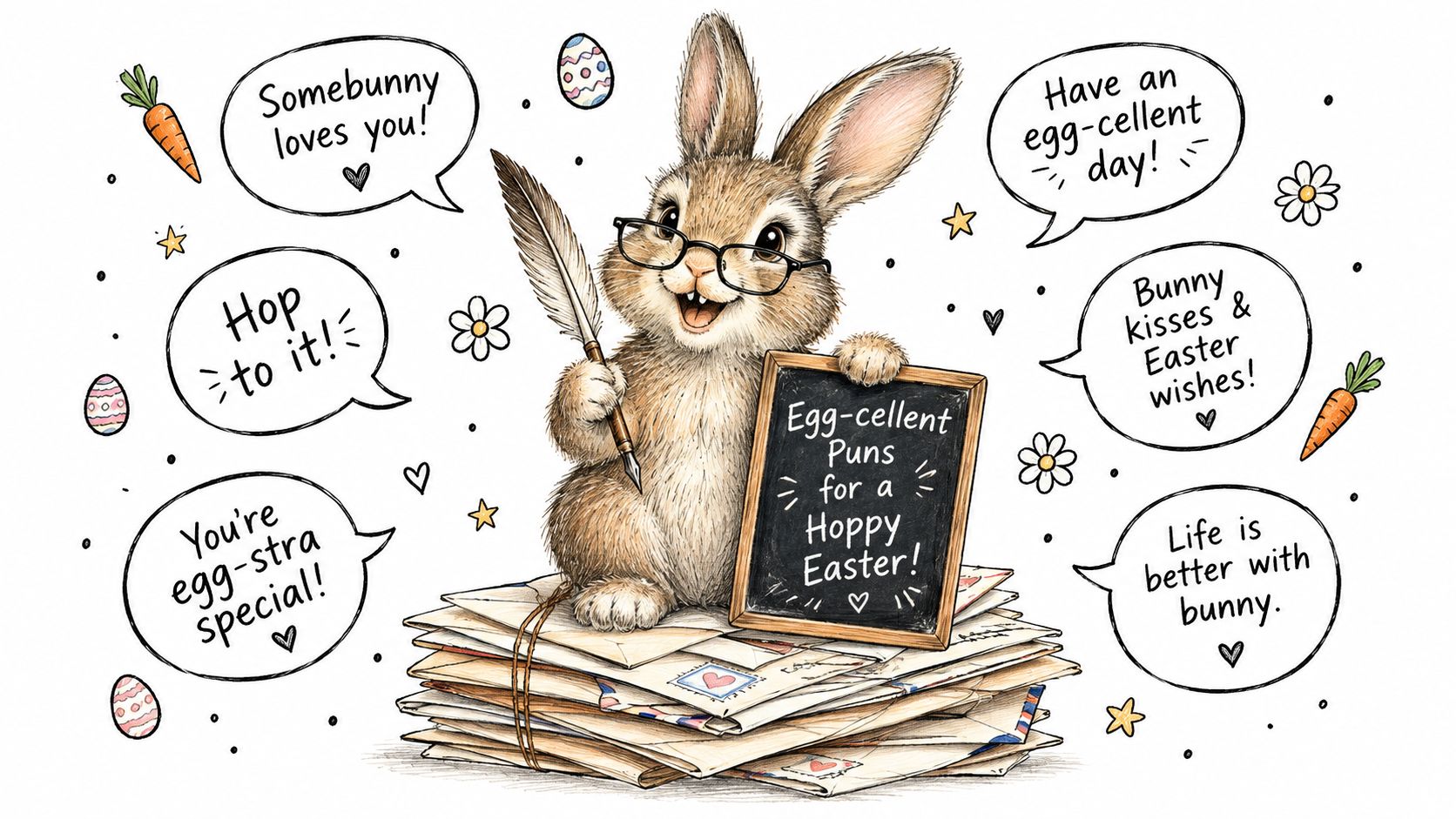
Punny bunny photo cards pair a personal snapshot with a playful Easter message and custom artwork. A family photo might feature rabbit ears, while a watercolor bunny carries a sign reading “Hoppy Easter” or “Somebunny loves you.” This approach gives humorous Easter cards a personal touch without requiring design experience.
Why the concept works
The joke catches attention, but the photo or illustration makes the card feel made for one recipient. Familiar examples include “Egg-stra Special” and “You’re Egg-straordinary,” while AI-generated watercolor bunnies can match a gentler joke for grandparents or a sillier one for friends. Cardly-style fulfillment also shows how pun-focused designs can be printed and mailed rather than left as a digital greeting.
Key insight: The strongest card connects the visual gag to the recipient, rather than adding a random bunny image to generic text.
Practical application
Use Mail This’s Muse AI assistant to brainstorm at least five options before choosing a line. Ask for separate tones, such as family-friendly, romantic, or sarcastic, then approve the wording and artwork together.
- Combine a family photo with subtle bunny ears or paws.
- Test landscape orientation for a wider headline.
- Preview several times to check centered, readable text.
- Batch-order multiple $9.99 cards for Easter gifts.
For more ideas, learn about different greeting card types before selecting your format.
2. Egg-Hunt Competition Joke Cards
Egg-hunt competition joke cards turn familiar Easter chaos into a scene recipients instantly recognize. A child dives for the last plastic egg, an adult secretly moves the prize basket, or one guest searches while everyone else shouts unhelpful clues. These humorous Easter cards work especially well for families, coworkers, and friends with a shared history of overly serious egg hunts.
Why the concept works
The best jokes exaggerate a real mishap, such as finding only plastic eggs, being “allergic to searching,” or treating the hunt like a championship match. A caption such as “Congratulations on your first-place finish in the adult supervision division” becomes more personal when paired with the recipient’s name or an inside joke.
Key insight: A specific hunt memory gives the punchline a reason to exist, making the card feel shared rather than copied from a generic Easter display.
Practical application
Start a conversation with Mail This’s AI assistant by describing the family incident, the recipient, and the preferred level of teasing. Ask for three playful versions, then choose the one that reads naturally aloud.
- Request a landscape layout for a full hunt-scene illustration.
- Place the punchline in clear, high-contrast lettering.
- Preview the card several times to check joke timing.
- Ask a trusted friend whether the humor feels warm, not embarrassing.
- Order two to three weeks before Easter for production and USPS delivery.
For another family-focused planning idea, learn more about fun family Christmas card ideas.
3. Chocolate Addiction Humor Cards
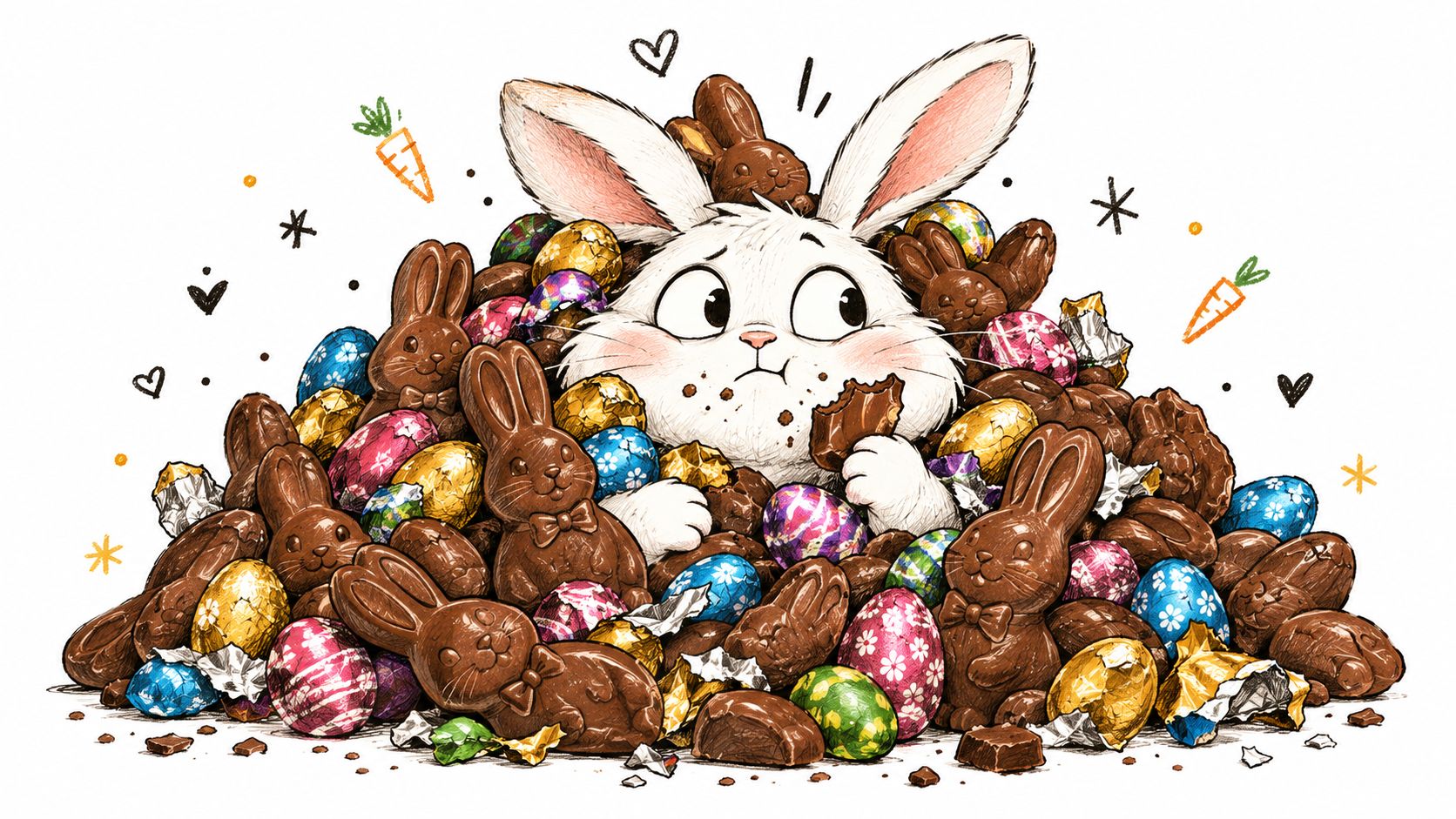
Chocolate addiction cards turn Easter indulgence into the main joke. A message about hiding the last chocolate egg, surviving a “chocolate emergency,” or joining a recovery program feels relatable, especially for friends and relatives who treat Easter baskets as a personal challenge.
Why the concept works
The humor is easy to understand and works across age groups. Exaggerated bunnies buried in chocolate, before-and-after eating scenes, or a chocolate-stained hand paired with “I can explain” give humorous Easter cards an immediate visual punch. Short lines also remain readable over rich chocolate imagery.
Key insight: Self-deprecating chocolate jokes feel friendlier than jokes about someone else’s eating habits, so they are safer for personal cards and workplace greetings.
Practical application
Ask Mail This’s Muse AI assistant for three to five joke concepts, then select one that matches the recipient’s sense of humor. Review the wording and image together before approving the final card.
- Pair a genuine chocolate photo with a guilty admission.
- Keep the headline under ten words when possible.
- Check text contrast against dark brown backgrounds.
- Avoid jokes that dismiss allergies, dietary restrictions, or health concerns.
- Order early so the card arrives before Easter celebrations and chocolate consumption peak.
For a physical greeting with an approval-first workflow, explore Mail This.
4. Peeps Parody Roast Cards
Peeps parody roast cards turn the marshmallow treat’s unusual texture, intense sweetness, and remarkable durability into the joke. A card might show a Peep surviving a flood with the caption “Peeps: tougher than your mouth,” or feature a mock flavor review describing it as “mysteriously chemical” and “stale confirmation.” These humorous Easter cards work best for friends and relatives who already debate whether Peeps are delicious or terrible.
Why the concept works
The humor comes from shared recognition, not a random insult. Peeps have inspired annual arguments across food blogs, social media, and Reddit, so a playful roast feels timely while remaining familiar. Illustrations can show a Peep rejected by candy quality control, enduring heat and water, or receiving an absurd durability award.
Key insight: Pair every criticism with a hint of affection. The joke should sound like teasing a persistent holiday tradition, not attacking the person who enjoys it.
Practical application
Start a Mail This AI conversation with “What’s funny about Peeps?” and request roast angles for a specific recipient. Approval-first editing lets you soften wording before printing, while independent typesetting keeps the punchline readable over a busy illustration.
- Reference the recipient’s known Peeps opinion.
- Test gentle, sarcastic, and exaggerated versions.
- Keep the headline short enough to read instantly.
- Preview the card several times to judge the tone.
- Choose a survival scenario for recipients who enjoy visual comedy.
For more help choosing a physical format, learn about different greeting card types before ordering.
5. Resurrection Day Puns and Double-Entendre Cards
Resurrection Day cards use the religious meaning of resurrection alongside everyday ideas about comebacks, recovery, or returning after a long absence. A career-themed illustration might say, “He has risen to the occasion,” while a seasonal design reads, “After winter’s rest, I’m resurrecting my sense of humor.” This gives humorous Easter cards a clever edge for recipients who enjoy wordplay.
Why the concept works
The double meaning invites a second look, especially when the artwork supplies context. A phoenix-like comeback image can support a “resurrection of good taste” joke, while a playful Monday morning scene makes a resurrection pun feel relatable rather than overly solemn.
Key insight: A double-entendre works best when the visual clarifies the joke instead of making the recipient explain it.
Practical application
Ask Mail This’s AI assistant for seven to ten resurrection-themed concepts, then rank them for clarity, audience fit, and originality. Review the final wording carefully, since the approval workflow helps avoid jokes that could feel disrespectful or too religious for a particular recipient.
- Personalize the line around a friend’s comeback, new job, or recovery.
- Add artwork clues that reinforce the secular meaning.
- Use landscape orientation for longer punchlines.
- Read the message aloud; if it needs explanation, simplify it.
- Consider the recipient’s comfort with religious humor before ordering.
Create and mail a personalized card with Mail This.
6. Easter Bunny Existential Crisis Cards
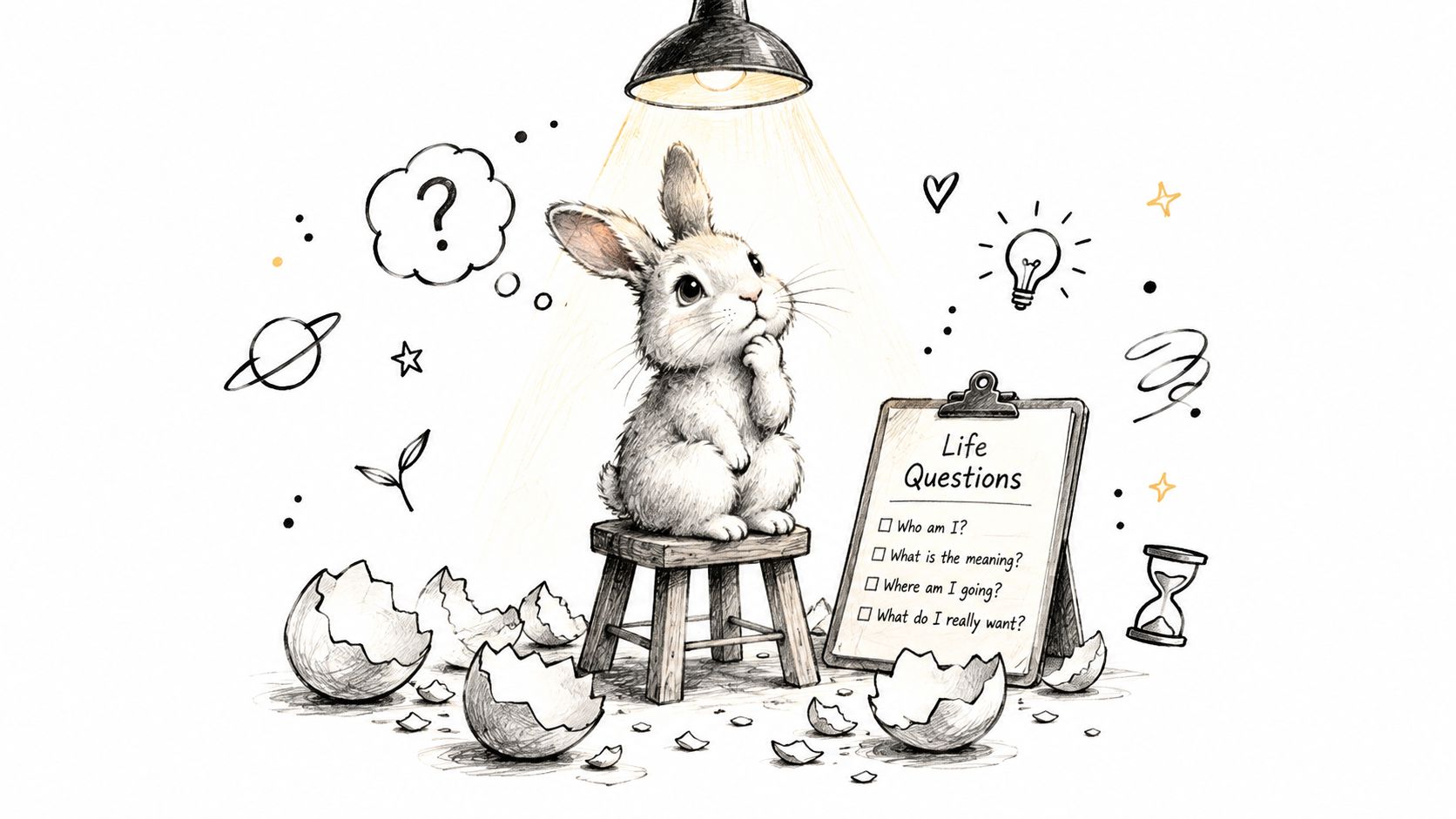
Easter Bunny existential crisis cards turn familiar holiday imagery into absurd philosophical comedy. Instead of simply saying “Hoppy Easter,” the card asks, “Does the Easter Bunny know where all those eggs come from?” or calculates the cost of supplying 300 million Americans. The contrast between a cheerful rabbit and a serious crisis makes these humorous Easter cards ideal for friends who enjoy dry, unexpected jokes.
Why the concept works
The comedy comes from treating a childhood tradition like a workplace, legal, or economic problem. A whimsical illustration of an exhausted bunny reviewing supply-chain charts becomes funnier when paired with “Philosophical questions I’ve been avoiding since childhood.” The serious wording gives the recipient something to reread, while the artwork keeps the message warm rather than bleak.
Key insight: Pair one genuinely curious question with one ridiculous visual detail, so the joke feels thoughtful instead of merely random.
Practical application
Start a Mail This AI assistant conversation with, “Why does the Easter Bunny do this?” Ask for short options aimed at a philosophical friend, a sarcastic sibling, or a coworker with dry humor.
- Keep the final message under 100 words.
- Try serious typography over colorful bunny artwork.
- Include one concrete detail, such as egg costs or delivery routes.
- Preview multiple versions to ensure the tone reads as funny, not confused.
Use Mail This to approve the wording and artwork before sending a physical card.
7. Easter Fail Recap Cards
Easter Fail Recap Cards turn personal holiday mishaps into the heart of a humorous Easter card. Instead of a tidy bunny graphic, the sender leans into what went wrong: a collapsed Easter basket captioned "Easter Prep 2024," a before-and-after of a costume that never came together, or a baking tray that lost its fight with the oven. Pairing the photo evidence with a short written recap transforms embarrassment into a story the recipient actually wants to read.
Why the concept works
Self-deprecating humor has become a familiar rhythm on Instagram stories and YouTube fail compilations, so readers already know how to enjoy a friendly "look what I did" recap. The card lands hardest when the sender and recipient share the memory, like a sibling who watched the egg hunt unravel or a friend who ate the test-batch frosting. AI tools help shape the disaster into a tidy arc with a punchline, and the approval workflow keeps sensitive details from going wider than intended.
Key insight: The strongest fail card picks a mishap the recipient already finds funny, then lets the photo do most of the storytelling.
Practical application
A few small choices keep the card kind instead of cringe.
- Pick a fail that is genuinely funny, not genuinely painful.
- Ask the AI assistant for a "lessons learned" arc with a light, forgiving tone.
- Choose a high-quality photo where the mishap reads clearly at a glance.
- Default to landscape orientation so the image and caption both fit.
- Preview the layout before sending to confirm the punchline stays readable.
For more ideas on formatting and personalization, explore different greeting card types before finalizing your design.
8. Lazy Easter Celebration Cards
Lazy Easter cards celebrate the anti-tradition approach, making humor around skipping preparations or staying in pajamas all day. This concept resonates with busy professionals and new parents who find traditional Easter obligations exhausting rather than joyful. A minimalist bunny illustration paired with text like "Skipping the hard parts this year" delivers a relatable punch without requiring elaborate design work.
Mail This users can work with the AI assistant to craft jokes around alternative Easter philosophies. Independent typography ensures even minimal-effort concepts read as intentionally clever rather than accidentally sloppy.
Why the concept works
The humor lands because it validates feelings many Easter celebrants experience but rarely voice. Millennials and Gen-Z consumers embrace this lazy-girl aesthetic as cultural rebellion against performative holiday participation.
Key insight: The simpler the artwork, the funnier the message reads. Overthinking the design kills the anti-effort joke.
Practical application
Start an AI conversation with "I'm skipping Easter—help me make it funny," then keep the message under fifty words. Embrace deliberately simple artwork and skip additional generations, since minimalism is the aesthetic.
- Use landscape orientation for wide, sparse imagery
- Personalize with the recipient's known aversion to tradition
- Test phrases like "$0 spent = success" as budget humor
- Send to people who appreciate anti-consumerism comedy
For more guidance on presentation, learn about addressing a greeting card to ensure the lazy aesthetic carries through every element.
8 Humorous Easter Card Ideas Compared
| Card Concept | Implementation Complexity 🔄 | Resource Requirements ⚡ | Expected Outcomes 📊 | Ideal Use Cases 💡 | Key Advantages ⭐ |
|---|---|---|---|---|---|
| Punny Bunny Photo Cards | Moderate: requires pun development, artwork alignment, and preview approval | AI assistant, custom photo or artwork, typography selection | High personalization and strong laughter or engagement potential | Family, friends, and recipients who enjoy wordplay | Personalized visuals, guided ideation, fixed pricing, and reliable text-image alignment |
| Egg-Hunt Competition Joke Cards | Moderate: needs scenario development, punchline refinement, and layout review | AI-generated or supplied artwork, landscape layout, personal memories | Strong relatability and social bonding through shared Easter experiences | Families, colleagues, and group card orders | Relatable humor, professional printing, personalization, and clear punchline presentation |
| Chocolate Addiction Humor Cards | Low to moderate: straightforward joke creation with visual readability checks | Chocolate artwork or photography, concise copy, contrast review | Broad appeal and easy recognition among chocolate lovers | Friends, family, office recipients, and thank-you cards | Universal theme, fast ideation, flexible messaging, and versatile use |
| Peeps Parody Roast Cards | High: requires careful tone calibration and multiple preview iterations | AI artwork, roast development, intensity adjustments, recipient context | Memorable, conversation-starting humor for niche audiences | Comedy fans, meme-aware recipients, and Peeps critics | Distinctive concept, strong meme potential, customizable roast intensity, and high memorability |
| Resurrection Day Puns and Double-Entendre Cards | High: requires nuanced wording, context, and sensitivity review | AI brainstorming, typography control, tone testing, recipient background | Sophisticated humor with strong impact when clearly understood | Educated professionals, literary audiences, and comeback celebrations | Intelligent wordplay, flexible religious/secular tone, and memorable personalization |
| Easter Bunny Existential Crisis Cards | High: involves complex concept development and careful brevity control | AI-assisted philosophical ideation, illustrative artwork, concise typography | Highly distinctive humor and strong conversation-starter potential | Philosophy enthusiasts, absurdist comedy fans, and younger meme-aware audiences | Original premise, intellectual appeal, unexpected humor, and creative positioning |
| Easter Fail Recap Cards | Moderate to high: requires photo selection, narrative framing, and sensitivity review | Personal photos, AI framing assistance, longer message format, landscape layout | Authentic connection and high memorability among people sharing the experience | Close friends, families, and witnesses to Easter mishaps | Genuine personalization, relatable self-deprecation, photo evidence, and strong emotional connection |
| Lazy Easter Celebration Cards | Low: uses short copy, minimalist visuals, and a quick approval process | Minimal artwork, concise messaging, optional AI generation | Fast, relatable humor with low production effort | Busy professionals, parents, budget-conscious senders, and anti-tradition audiences | Efficient creation, low resource needs, strong relatability, and clear minimalist aesthetic |
Turn the Best Joke Into a Card Worth Mailing
A funny Easter card works best when the humor fits the person receiving it. Before choosing artwork or polishing a punchline, decide what kind of laugh you want to create:
- Broad bunny or chocolate humor: A safe choice for coworkers, neighbors, relatives, and anyone who enjoys an easy seasonal joke.
- Egg-hunt competition jokes: Ideal for families and friends with shared memories of chaotic searches, missing clues, or disputed winners.
- Peeps roasts: Pick these for recipients who enjoy playful arguments about candy, texture, or questionable holiday traditions.
- Resurrection wordplay: Use carefully for adults who appreciate clever double meanings and will welcome a more polished joke.
- Existential bunny humor: Best for niche thinkers, dry-humor fans, and recipients who prefer an unexpected angle.
- Easter fail recaps: Save these for close relationships where a personal mishap will feel affectionate rather than embarrassing.
- Lazy-celebration humor: Send it to anyone who rejects holiday pressure and would rather celebrate with snacks and a quiet morning.
Turn the choice into a finished design
Keep the punchline concise enough to read at a glance. Let the artwork establish the situation, then make the text deliver the twist instead of explaining every detail.
The strongest humorous Easter cards make the image set up the joke and the wording finish it.
Choose portrait orientation for a single character, close-up expression, or vertically stacked message. Landscape usually suits group scenes, egg hunts, table settings, and jokes that need room to unfold from left to right.
Check cultural, religious, dietary, and relationship sensitivities before approving the card. A chocolate joke may miss the mark for someone with allergies, while resurrection wordplay may not suit every recipient. Read the exact message in the preview, inspect the image for awkward details, and confirm the total cost before payment.
Use a practical Mail This workflow
- Describe the recipient, relationship, and desired tone to the AI assistant.
- Request several genuinely different concepts, not minor rewrites of one joke.
- Select the message-image pairing that feels natural for that person.
- Verify the mailing address, destination, and available shipping coverage.
- Approve the final preview only after checking every word and detail.
- Allow time for production and domestic delivery, without assuming a guaranteed arrival date.
That process turns a clever idea into a personal gesture someone can hold onto. The right joke does not need to be loud or complicated; it needs to sound like something you would actually send.
Ready to put one of these ideas in the mail? Mail This helps you create and send humorous Easter cards through an approval-first process, so you can review the message and artwork before your card goes out.