You're staring at a blank card, trying to say something meaningful without sounding like you copied the first generic birthday wish you found. Dad may be sentimental, private, funny, practical, or some combination of all four, so the right words depend less on finding a perfect phrase and more on choosing the feeling you want to leave behind.
The strongest birthday card messages for dad usually combine one clear tone, one specific detail, and a natural closing. That detail might be a lesson he taught you, a habit you tease him about, a hobby you share, or a plan you're excited to make together.
The eight messages below cover different emotional purposes, from gratitude and humor to encouragement and future plans. Choose the approach that matches your relationship and Dad's personality, then adapt the wording so it sounds like something you would say. If you use Mail This to turn the finished message and a personal image into a physical card, review the exact wording, design, recipient details, and total before approving it for mailing.
Table of Contents
- 1. Heartfelt Gratitude and Appreciation Message
- 2. Humorous and Light-Hearted Joke Message
- 3. Milestone Achievement and Pride Message
- 4. Playful Role Reversal and Dad Jokes Message
- 5. Wisdom and Life Lesson Message
- 6. Fun Activities and Shared Interests Message
- 7. Supportive and Encouragement Message
- 8. Future-Focused and Excitement Message
- 8-Style Comparison: Birthday Messages for Dad
- Make the Message Sound Like You
1. Heartfelt Gratitude and Appreciation Message
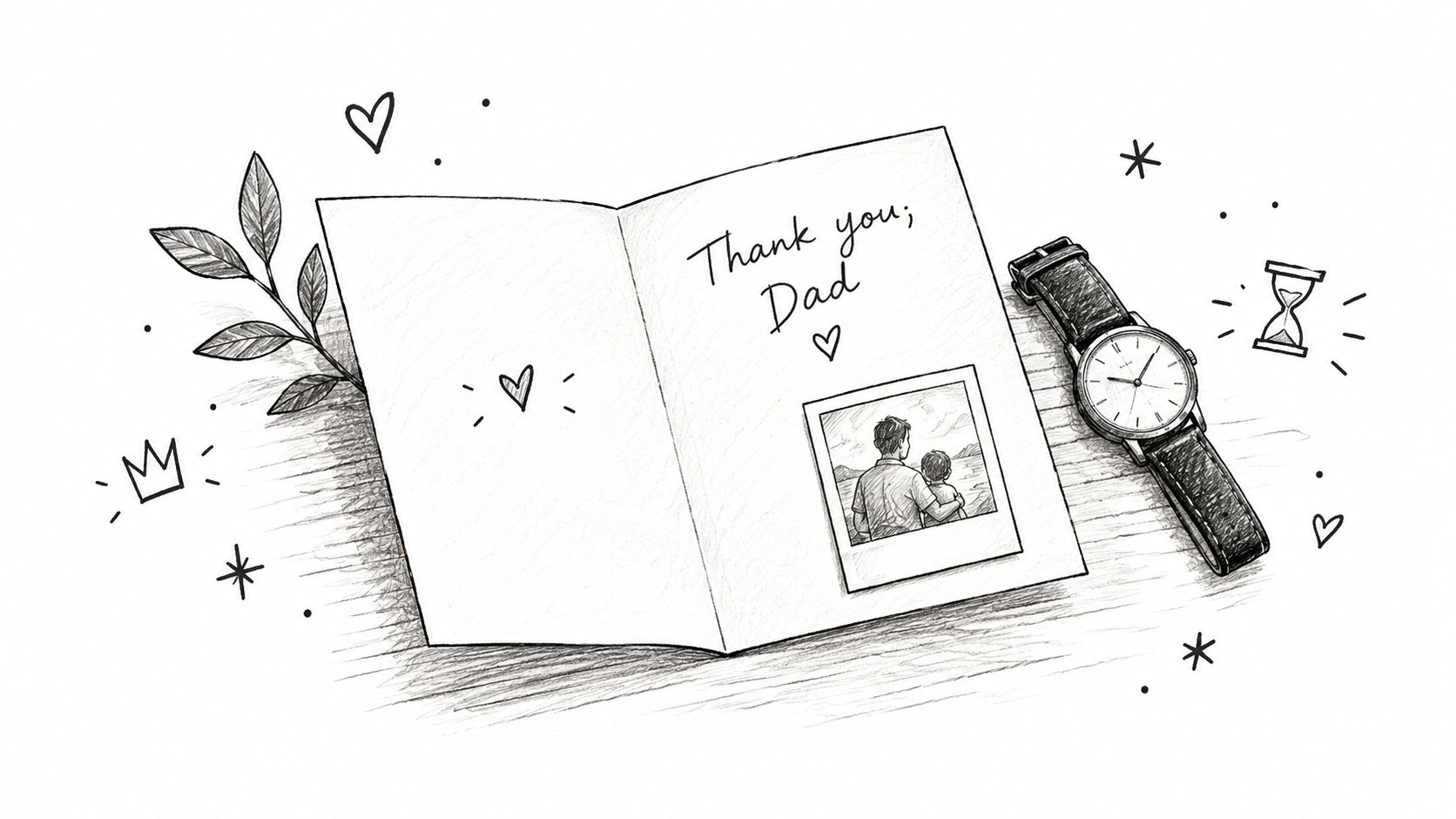
Dad, your quiet strength and unwavering support have shaped who I am. Thank you for the late-night conversations, the practical advice, and all the times you believed in me before I believed in myself. Happy Birthday to the man who taught me what it means to be dependable.
This message works because it names specific forms of support instead of relying only on broad praise. “You're the best dad” is warm, but “late-night conversations” and “practical advice” give Dad something recognizable to hold on to. That kind of handwritten personalization can make a gift feel more distinctive. A U.S. survey found that 58% of Americans say a personalized, handwritten note helps a gift stand out, according to Ipsos survey findings on handwritten notes.
Make appreciation sound like you
Replace one phrase with a detail only your family would know. You might mention the lunches he packed, the advice he gave before a difficult decision, or the way he always made time for a phone call. For a stepdad, father-in-law, or father figure, focus on the ways he chose to show up rather than assuming a childhood history.
Try these prompts:
- Name a quality: What does Dad do consistently that makes people feel safe or supported?
- Recall a moment: Which conversation, favor, or ordinary routine still stays with you?
- Choose the emotional level: Would “I love you” sound natural, or would “I'm grateful for you” feel more like your voice?
Sign-off options include “Love, [Name]”, “With appreciation, [Name]”, or “Proud to be your kid, [Name]”. Before sending, check that the personal line is easy to read, the image supports the emotion, and the final preview hasn't separated the closing from the main message. For more help shaping the wording, see this guide to a birthday card message.
2. Humorous and Light-Hearted Joke Message
Dad is settling into his favorite chair when someone asks him to fix one more thing. A card that gently recognizes this familiar scene can make him laugh without turning his birthday into a comment about age.
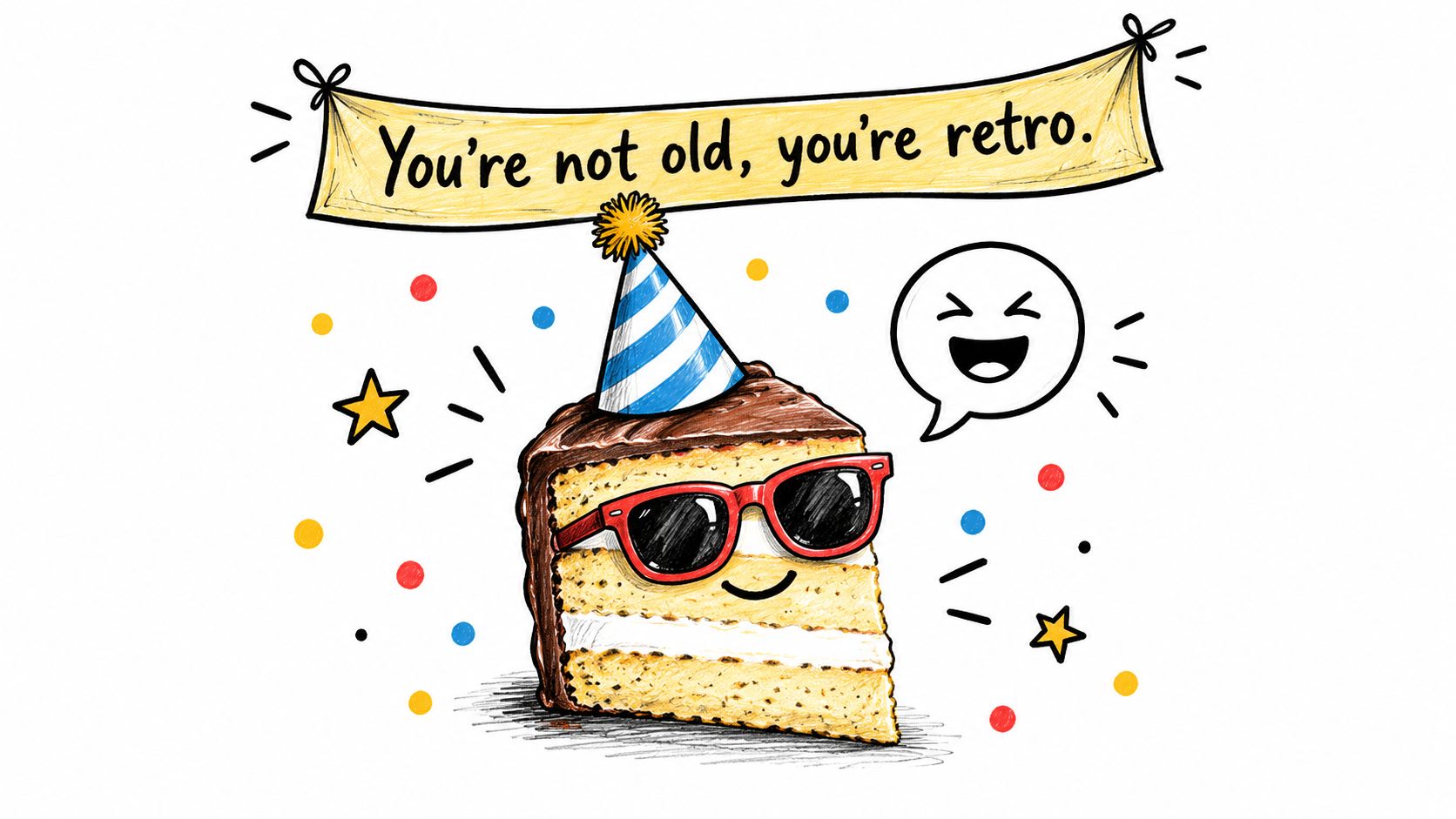
You're not old, Dad. You're retro, experienced, and increasingly valuable as a source of historical information. Happy Birthday to a classic. I hope your day includes plenty of cake, a comfortable chair, and no one asking you to fix anything.
This works because the joke combines exaggeration with a clear sign of affection. “Retro” keeps the age reference playful, while the wishes for cake and rest bring the message back to his birthday. Read the words aloud before printing them. Hearing the punchline helps you catch a line that sounds sharper than it looked on the page.
Add one sincere sentence if the humor needs a warmer finish: “I'm lucky to have you as my dad, and I hope today gives you a break from everyone's repair requests.” The joke gets his attention, and the personal sentence explains why the teasing is safe.
Match the joke to Dad's humor
A father who enjoys classic one-liners might appreciate: “I told a joke at your birthday party, but it was all about you. Sorry, it's hereditary.” The hereditary twist makes the joke feel like family banter.
For a dad who is always repairing something, try: “Happy Birthday to the man who can fix almost anything, except the family's habit of asking you to fix things.” This version works best when that habit is genuinely familiar. Replace “family” with a specific person or object if your household has an inside joke.
Keep the wording short when the illustration carries part of the humor. Choose a playful drawing, a photograph of Dad in his element, or artwork connected to a shared joke. Ideas about different types of greeting cards can help you choose between a silly, classic, or lightly teasing design.
Choose the closing that fits your relationship:
- Warm joke: “Love, your favorite kid, [Name]”
- Sibling banter: “Still your funniest child, [Name]”
- Understated affection: “Have a great birthday, [Name]”
Before sending, check three things: the punchline is easy to find, the sincere line is readable, and the artwork does not compete with either one. If Dad would repeat the joke later, the tone is probably right.
3. Milestone Achievement and Pride Message
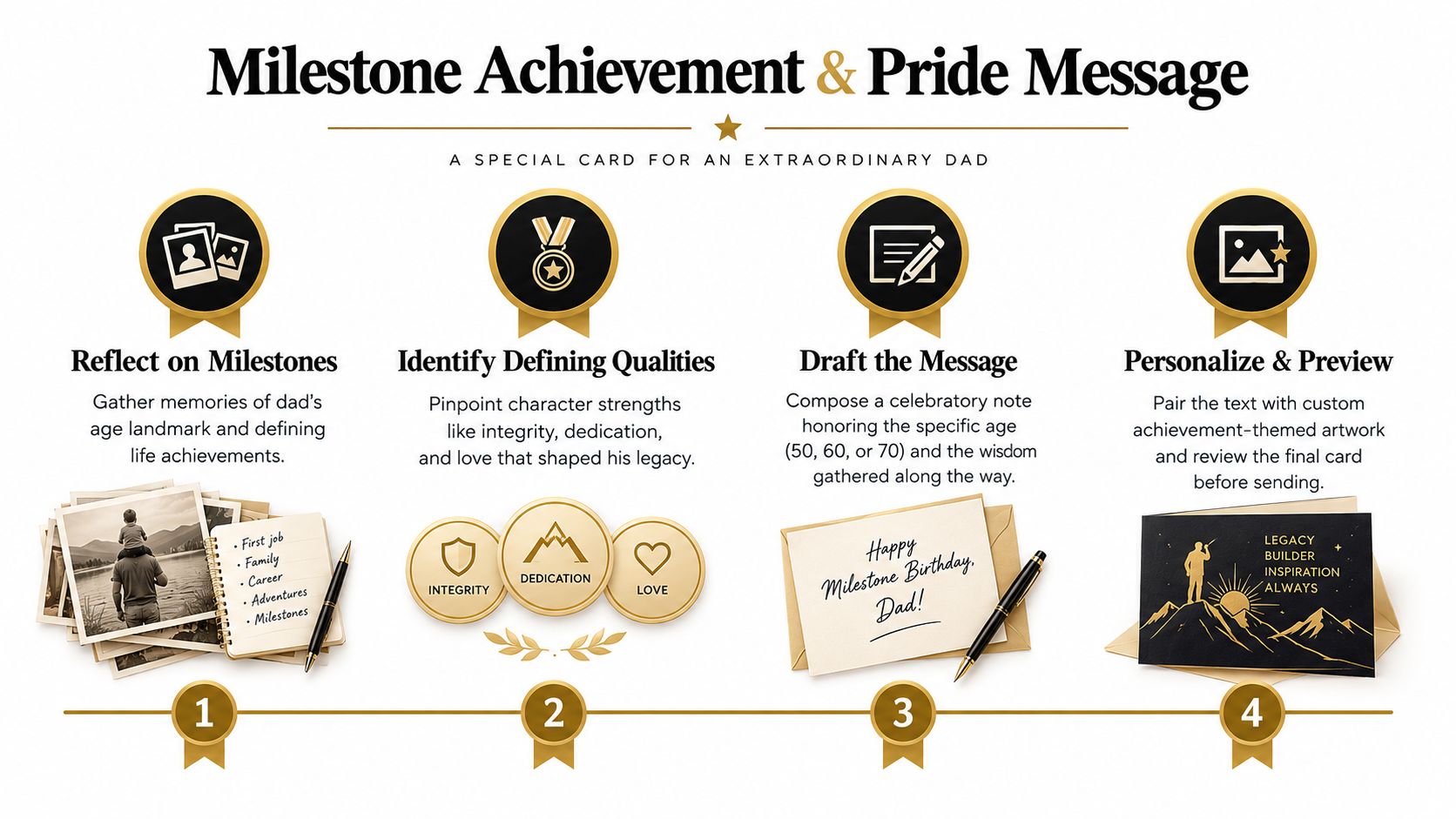
Some birthdays mark more than another year. They offer a chance to recognize what Dad has built, survived, and given to others. A message such as this can begin:
“Happy Birthday, Dad. You've built a life filled with integrity, love, and purpose, and you've given our family an example we can carry forward. Today, I'm celebrating not only your birthday, but also the person you've become and the people whose lives you've shaped.”
The message works because it connects the celebration to a life, an achievement, or a lasting influence. Use a career, family tradition, difficult period he handled with courage, or the home and relationships he helped create. The age becomes a doorway into the story, rather than the whole story.
For a specific birthday, write: “Happy 60th, Dad. Six decades of showing up for the people you love is worth celebrating.” If the birthday is not a major milestone, replace the age with a personal achievement, such as maintaining a family tradition, supporting others through a hard year, or creating a welcoming home.
Let the card show the story
Match the design to the memory you want readers to feel. A timeline of family photographs suggests shared history. A favorite scenic view can represent years of work and perseverance. A simple design featuring the birthday year keeps attention on Dad and leaves the message room to breathe.
Use these prompts while drafting:
- What has he built? Name a family tradition, business, home, or contribution to the community.
- What has he overcome? Mention his resilience without turning the card into a summary of hardship.
- What are you proud to inherit? Choose one quality, such as patience, work ethic, humor, curiosity, or generosity.
The closing can make the relationship more personal: “With love and pride, [Name]” suits a heartfelt card, “Celebrating you today, [Name]” feels direct, and “Here's to everything you've built, [Name]” keeps the focus on his achievements.
Before printing or sending, preview the physical card. Confirm that the age or year is correct, the message remains readable beside photographs or timeline elements, and the sign-off has enough space around it. Let the design support the tribute, like a frame around a meaningful photograph.
4. Playful Role Reversal and Dad Jokes Message

Happy Birthday to the man who raised a child who is finally old enough to appreciate his terrible jokes. I used to groan at every pun, but I am beginning to understand the legacy. Keep them coming, Dad, and have a brilliant birthday.
The humor works because it turns a familiar family role into affection: his identity as “the dad” becomes part of the joke. You are teasing a harmless habit, not criticizing something sensitive. Choose this approach when Dad enjoys banter and takes pleasure in being known for his sayings, puns, or perfectly timed one-liners.
A simple version might read:
Why did the calendar go to your birthday party? Because it wanted to see you age gracefully. Luckily, your sense of humor has not aged a day. Happy Birthday, Dad.
The calendar joke gives the card an easy punchline, while the second sentence makes the compliment clear. If that joke feels too familiar, replace it with a line from your family's own history. His repeated phrase, a legendary pun, or a joke everyone can recite will sound more personal than a random gag.
Keep the joke connected to the relationship
Add one sincere sentence beneath the humor: “You have always known how to make us laugh, even when we pretended not to.” That line explains why you chose a playful message and gives the card emotional weight.
Adjust the tone to match your audience. For a gentle card, use “Your jokes are still wonderfully predictable.” For a stronger sibling-style tease, mention a specific eye roll, household phrase, or annual birthday routine. Then add a detail only your family would recognize.
Possible sign-offs include “Your formerly reluctant audience, [Name]”, “With love and a carefully timed eye roll, [Name]”, and “Your favorite joke enthusiast, [Name]”. A warmer option, such as “With love, [Name],” keeps the message playful without making the closing another punchline.
Before printing or sending, check the physical layout. Make sure the joke breaks at the right point, the punchline stays together, and the illustration does not compete with the inside message. A large front-cover joke calls for shorter interior text, while a detailed image needs simple, readable typesetting.
5. Wisdom and Life Lesson Message
Happy Birthday, Dad. You taught me that integrity matters more than appearances and that kindness is a form of strength. I carry those lessons into decisions you may never see, and I'm grateful that your example still guides me.
This message fits an adult child who has begun to recognize Dad's influence more clearly. Advice that once sounded ordinary can gain meaning as your own responsibilities grow. The message works because it connects a lesson and the way that lesson appears in your life. A specific example acts like a window into that influence, letting Dad see where his guidance lives today.
Start with the principle, then attach it to a real moment. Maybe he encouraged you to tell the truth during a difficult conversation, finish something you had started, welcome someone into the family, or choose patience over pride. The event does not need to be dramatic. It only needs to show the lesson in practice.
Let the memory carry the meaning
“Thank you for teaching me so much” is sincere but broad. Try: “Whenever I'm unsure what the right thing is, I think about how you handled that conversation with honesty and calm.” The second version sounds more personal because it links his advice to an experience you both recognize.
Shape the details around your relationship:
- What did he model? Choose responsibility, fairness, courage, generosity, or persistence.
- When did you understand it? Identify the moment an old lesson became relevant in your own life.
- How do you carry it forward? Explain how his example influences a choice, habit, or relationship now.
A reflective sign-off could be “Still learning from you, [Name]”, “With love and gratitude, [Name]”, or “Thank you for showing me the way, [Name]”. Choose the first for an ongoing bond, the second for a tender card, and the third when the message centers on his guidance.
Before making the card, use this quick preview checklist:
- Keep one main lesson and one supporting memory.
- Read the wording aloud. Replace any sentence that sounds like a formal speech.
- Check that the example fits comfortably inside the card.
- Choose restrained artwork, such as a tree, path, workshop, or familiar place, if the words already carry emotional weight.
- Read the printed message from a short distance to confirm that the type is easy to follow.
6. Fun Activities and Shared Interests Message
A birthday card can begin with the activity Dad would happily repeat with you:
“Happy Birthday to my favorite golf partner and life coach. Here's to more rounds, more laughs, and more stories about the shots we'll definitely play better next time. I'm looking forward to our next day out together.”
The message works because the hobby acts as a relationship cue. It reminds Dad that your bond lives in shared time, familiar routines, and the small jokes that belong to both of you. Golf, fishing, cooking, music, sports, travel, gardening, photography, board games, and weekend projects can all give the card a personal center.
Choose one detail that another person would not understand immediately. It might be a missed putt, a family recipe, a favorite team, or the route you always take together. An inside reference feels warm because Dad already knows the story, so you do not need to explain it.
Then give the memory somewhere to go. “More golf soon” sounds friendly, while “I'm booking us a Saturday morning round” creates a clear plan. If you have not arranged anything, name the activity you want to bring back. A future visit, game, meal, trip, or project turns affection into something Dad can anticipate.
Use these prompts while drafting:
- What do you do together? Name the activity, place, or ritual.
- What makes it yours? Add a phrase, result, or story shared only by your family.
- What happens next? Suggest a specific outing or project.
Match the sign-off to the relationship. “Your favorite teammate, [Name]” suits friendly competition. “Until our next adventure, [Name]” feels open and affectionate. “Love, your still-competitive kid, [Name]” adds a playful family note.
For ideas that connect personal wording with a physical greeting, see this personalized Father's Day card guide. Before printing, check the card in its actual orientation, keep the activity image from overpowering the message, and confirm that the future plan is specific enough to feel real.
7. Supportive and Encouragement Message
A supportive birthday card can remind Dad that he has company through a difficult season. Try this:
Happy Birthday, Dad. I'm here for the big things and the small ones. You've always been strong for us, and you don't have to carry everything alone. I'm ready to listen, help, visit, or sit with you whenever you need me.
The message works because it offers steady presence without turning his birthday into a serious announcement. It suits a transition involving health, work, family, or daily routine. Like a handrail on an unfamiliar staircase, the words give reassurance while allowing Dad to choose his own pace.
Make support specific and respectful
Vague offers can sound polite but difficult to use. Replace “Let me know if you need anything” with a clear action, such as “I'll call you on Sunday” or “I'd like to come over and help with the garden.” A practical promise gives the card something Dad can trust.
If he values privacy, keep the challenge in the background: “Whatever this year brings, you won't face it alone.” If direct language suits your relationship, name the change and follow it with confidence in his patience, resilience, humor, or determination. The aim is for him to feel respected, loved, and accompanied.
Personalize the message with one offer and one quality you admire:
- What can you give? Time, transport, practical help, conversation, or company.
- What strength does Dad show? Mention the quality you have seen in him.
- What should happen next? Name a call, visit, meal, or task you can arrange.
Choose a sign-off that matches your closeness. “Always here, [Name]” feels direct. “With all my love, [Name]” is warm and familiar. “Beside you every step, [Name]” suits a particularly tender relationship.
For the physical card, use calm, bright imagery such as a favorite place, open sky, warm family photograph, or simple colors. Preview the design in its actual orientation, check that the artwork does not make the card resemble a sympathy note, and remove any phrase that sounds patronizing. The finished card should feel like you are standing with Dad, not speaking down to him.
8. Future-Focused and Excitement Message
Happy Birthday, Dad. I'm excited for all the adventures ahead, from more travels and long conversations to ordinary moments that become our favorite stories. Here's to another year of possibilities, shared plans, and time together. I can't wait to see what we do next.
This message works by turning the birthday toward possibility. It suits an active dad, a parent starting a new chapter, or someone who enjoys plans and experiences more than reflection. The future becomes an open road rather than a fixed schedule, which gives the card an optimistic feel without focusing on age.
Make the excitement specific. Add the trip, concert, renovation, fishing weekend, family meal, sporting event, or destination you have discussed. If Dad has a personal goal, mention it with encouragement rather than making his birthday sound like a performance review.
Give the promise a real shape
A small plan can carry more weight than a grand prediction. “I'm looking forward to our next Sunday breakfast” may feel more genuine than “The best is yet to come” when breakfast is already your ritual. Pair one hopeful thought with one experience you can both recognize.
Use these prompts to adapt the wording:
- What will you do together? Name an activity or occasion already under discussion.
- What does Dad enjoy now? Choose an experience that reflects his interests.
- What should happen more often? Consider laughter, travel, meals, projects, or relaxed time together.
The closing should match your relationship. “Here's to another great year, [Name]” feels upbeat. “Can't wait for what's next, [Name]” sounds eager and conversational. “Love, your adventure partner, [Name]” adds playful closeness.
For the physical card, use a sunrise, open road, favorite destination, or activity image. Preview the design in its actual orientation, keep the typography clear, and leave enough space for the message to breathe. Before printing or signing, check every planned event, date, and recipient detail. Read the card aloud as well. The optimism should sound like your genuine voice, not a promise larger than your relationship can support.
8-Style Comparison: Birthday Messages for Dad
| Message Style | 🔄 Complexity | ⚡ Resource / Effort | 📊 Expected Outcome | 💡 Ideal Use Cases | ⭐ Key Advantages |
|---|---|---|---|---|---|
| Heartfelt Gratitude & Appreciation Message | 🔄 Moderate, requires reflection and specificity | ⚡ Medium, time to recall memories; AI speeds drafting | 📊 High lasting emotional impact; ⭐⭐⭐⭐ | 💡 Adult children seeking sincere, personal tribute | ⭐ Deeply personal, versatile across ages |
| Humorous & Light-Hearted Joke Message | 🔄 Low, straightforward but needs tone-check | ⚡ Low, quick to generate; AI offers variations | 📊 Immediate levity; variable reception; ⭐⭐⭐ | 💡 Dads with a good sense of humor; son-father banter | ⭐ Easy, entertaining, pairs well with punchline art |
| Milestone Achievement & Pride Message | 🔄 Medium, needs research and formal framing | ⚡ Medium-High, requires specific achievements/details | 📊 High ceremonial impact; memento-quality; ⭐⭐⭐⭐ | 💡 Significant birthdays (50/60/70); formal celebrations | ⭐ Honors accomplishments; elevates the occasion |
| Playful Role Reversal & Dad Jokes Message | 🔄 Low–Medium, uses classic joke formulas; balance required | ⚡ Low, fast with AI brainstorming | 📊 Fun and relatable; may elicit groans; ⭐⭐⭐ | 💡 Millennial/Gen‑X senders; dads who enjoy self-aware humor | ⭐ Relatable, celebrates “dad” identity affectionately |
| Wisdom & Life Lesson Message | 🔄 Medium, needs thoughtful, non-lecturing tone | ⚡ Medium, time for introspection; AI helps clarify | 📊 Deep, respectful impact; keepsake-worthy; ⭐⭐⭐⭐ | 💡 Adult children valuing mentorship and guidance | ⭐ Conveys growth and enduring influence |
| Fun Activities & Shared Interests Message | 🔄 Low, mainly references specific hobbies | ⚡ Low–Medium, pick details and imagery | 📊 Personal and bonding; strengthens connection; ⭐⭐⭐ | 💡 Senders who share hobbies with dad; younger adults | ⭐ Highly personalized and easy to visualize |
| Supportive & Encouragement Message | 🔄 Medium, requires sensitivity and balance | ⚡ Medium, needs careful wording to avoid pity | 📊 Deep emotional support during hardship; ⭐⭐⭐⭐ | 💡 Dads facing health/transition challenges | ⭐ Shows presence, offers genuine support |
| Future-Focused & Excitement Message | 🔄 Low–Medium, optimistic framing, realistic detail | ⚡ Low, brainstorm future plans; AI aids ideas | 📊 Uplifting and motivating; creates anticipation; ⭐⭐⭐ | 💡 Active dads with plans; celebrating new chapters | ⭐ Forward-looking, fosters excitement for what's next |
Make the Message Sound Like You
A good draft doesn't need to sound perfect on the first attempt. It needs to sound like you speaking to Dad, with enough detail that he can recognize the relationship behind the words. Start by choosing one dominant tone. Gratitude, humor, pride, wisdom, shared fun, encouragement, or anticipation can all work, but combining every feeling in one short card usually makes the message less clear.
Next, replace one generic phrase with a specific memory or quality. Change “Thanks for always being there” to “Thank you for answering my calls when I didn't know what to do.” Change “You're a great dad” to “You showed me what dependability looks like by keeping every promise you made to us.” The detail doesn't need to be dramatic. Ordinary moments often feel most believable because they belong to your family.
Add a short sign-off that matches the relationship. You might use “Love, [Name]”, “With appreciation, [Name]”, “Your favorite kid, [Name]”, or “Here's to another great year, [Name].” If Dad prefers understated affection, keep the closing simple. If your family uses teasing, let a small joke carry the final line.
Use these prompts if the message still feels generic:
- What does Dad always say?
- What activity do you share?
- What has he taught you?
- What are you looking forward to doing together?
Read the final wording aloud before you send it. Remove anything you wouldn't say in conversation, shorten long sentences, and check that the emotional level feels right for Dad. A handwritten note can feel especially personal when it includes a shared memory or individually composed line, rather than repeating a standard greeting.
If you're creating a physical card through Mail This, review the full preview before approval. Check the exact message, image placement, recipient details, total, estimated arrival information, and whether the destination is covered for delivery. The service connects an AI-assisted drafting process with card design, printing, addressing, and domestic mailing, but the sender should still make the final decision about every word and visual detail.
The best birthday card messages for dad don't try to summarize an entire relationship. They say one true thing clearly. Choose the feeling, add the detail only you can provide, and give Dad a card that sounds like it came from the person who knows him.
Mail This helps turn a short, thoughtful birthday idea into a personalized physical greeting card with your wording and image, followed by a preview-and-approval step before mailing. Create and review a birthday card for Dad through Mail This, then approve the design when every detail feels right.