Your neighbor has carried you through a difficult week, collecting groceries, bringing dinner, and checking whether you need anything before heading to work. The card needs to go out tomorrow, and you're staring at a blank space beneath a printed flower. You want to say more than thanks for everything, but a sweeping tribute doesn't sound like you either.
The problem isn't finding a longer message. It's choosing words that fit what happened and how well you know the person. Thank you for your kindness becomes personal when you add the detail only that recipient would recognize, such as the dinner left on your porch after a hospital visit.
Choose the phrase that matches the gesture, then describe what the person did and why it mattered. Each option below includes a situation, a tone, and wording you can copy and adjust without making the note sound borrowed.
Table of Contents
- 1. Thank You for Your Kindness
- 2. Your Kindness Did Not Go Unnoticed
- 3. Thank You for Being There for Me
- 4. I Am So Grateful for Your Generosity and Kindness
- 5. Your Thoughtfulness Meant More Than You Know
- 6. Thank You for Your Kindness During a Difficult Time
- 7. Words Cannot Express How Much Your Kindness Has Meant to Me
- How the Seven Thank-You Phrases Compare
- Choosing the Phrase That Fits the Moment
1. Thank You for Your Kindness
Best for everyday help, newer relationships, and straightforward appreciation. This is the safest choice when you want warmth without suggesting a closeness you don't share. It suits a helpful neighbor, a welcoming volunteer, or a friend who brought groceries while you were recovering.
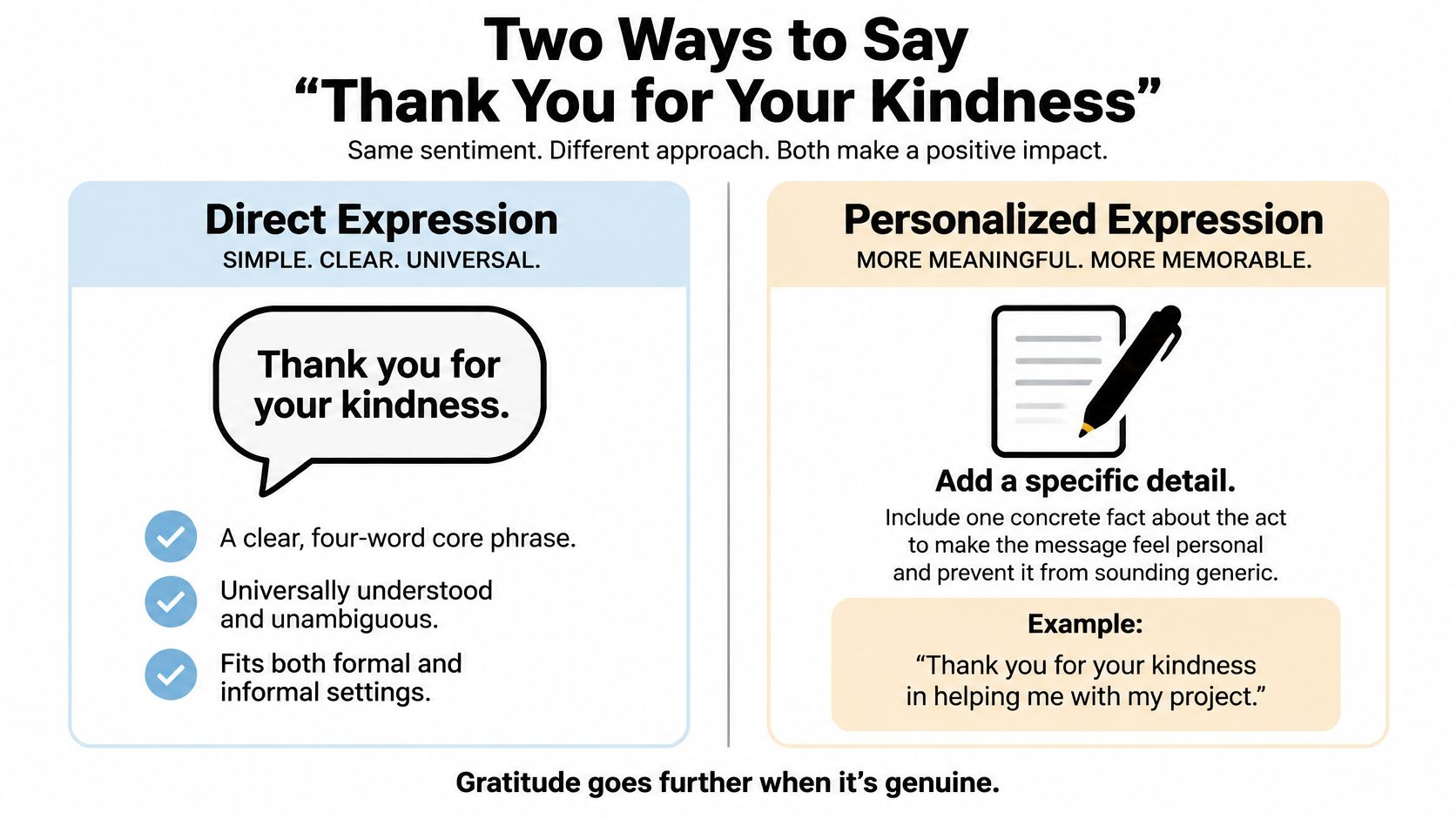
The comparison below shows how a direct opening becomes more personal with a concrete detail.
Add the action, not more adjectives
Instead of adding wonderful, amazing, and extraordinary, name what happened. The specific action is what distinguishes your note from a message anyone could send.
Thank you for your kindness while I was recovering from surgery. Bringing my groceries upstairs made those first days at home much easier.
For a less personal relationship, keep the impact modest: Thank you for your kindness at the community event. Introducing me to the other volunteers helped me feel welcome.
You don't need to explain the entire situation or promise an equivalent favor. For help with the greeting, body, and sign-off, use our guide to what to write in a thank-you card.
This video offers another way to approach expressing appreciation.
Finish with a sign-off you would use, such as With thanks or Warmly. If you're writing on a printed card, a handwritten signature can add a personal touch without requiring a longer message.
2. Your Kindness Did Not Go Unnoticed
A coworker covered your shift during a family emergency. They didn't announce it, ask for recognition, or make you explain the situation again. This phrase fits help that happened without an audience.
Its tone is observant rather than sentimental. The important detail is the effort you noticed, especially something the person might assume you missed.
Make recognition sound personal
Your kindness did not go unnoticed when you covered my shift during the family emergency. Being able to leave without worrying about work gave me room to focus on my family.
For an event volunteer, try: Your kindness did not go unnoticed. You stayed afterward to pack the supplies, which meant I wasn't left handling the cleanup alone.
The trade-off is that the opening can sound like a supervisor's evaluation. With a close friend, a more conversational version may fit better: I noticed how you took care of everything, and I really appreciated it.
- Name the hidden work. Mention the cleanup, schedule change, preparation, or check-in rather than praising helpfulness in general.
- Describe the relief. Explain what you could stop worrying about because they stepped in.
- Keep recognition private when appropriate. Don't turn a discreet favor into a public story without permission.
Avoid attaching a new request. A note that ends by asking them to cover another shift makes the appreciation feel conditional.
3. Thank You for Being There for Me
Choose this when someone's presence mattered more than a completed task. A friend who listened during treatment or a sibling who sat beside you after a loss offered something different from an errand. Your wording should recognize that steady companionship.
This illustration reflects the quiet support this phrase acknowledges.

Describe what being there looked like
Thank you for being there for me after Dad died. You kept calling, listened when I wanted to talk, and never made me feel awkward when I didn't.
That's more grounded than saying you couldn't have survived without them. Even if you feel that strongly, appreciation doesn't need to make someone responsible for your future well-being.
A randomized study of undergraduates found that digital gratitude interventions improved outcomes including connectedness and perceived support relative to controls, according to the published gratitude-intervention study. That supports making an intentional expression of thanks, not claiming that a card will produce a particular emotional result.
Keep the difficult background brief and spend more space on the person's care. If you're still overwhelmed, send a simple acknowledgment now and a fuller note when you have capacity.
For a message that combines gratitude with ongoing connection, our thinking-of-you card guide can help you find a gentle closing. I'm grateful we can talk often says enough.
4. I Am So Grateful for Your Generosity and Kindness
Opening a home during a move, lending a needed car, or organizing meals calls for wording that recognizes a meaningful contribution. Generosity names what someone gave; kindness recognizes the care behind it. Together, they suit help that required time, resources, or inconvenience.
The gesture might look like a thoughtfully prepared delivery rather than an expensive gift.

I'm so grateful for your generosity and kindness in opening your home to us during the move. Having somewhere comfortable to stay while we waited for the keys took a real weight off our shoulders.
Recognize the contribution without pricing it
A good detail describes how the help worked in your life. It doesn't calculate what the recipient spent or speculate about what they sacrificed.
- For hospitality. Mention the welcome or comfort, such as making space for the children's bedtime routine.
- For a gift. Describe its use or meaning rather than its retail value.
- For donated time. Name the task they took on and the pressure it removed.
Avoid turning gratitude into a debt statement. I'll never be able to repay you may express sincere emotion, but it also introduces a ledger into an otherwise generous exchange.
If the opening sounds too formal for your relationship, use Thank you for being so generous with your time. Keep the strength of the wording proportional to the help, not to how impressive you want the card to sound.
5. Your Thoughtfulness Meant More Than You Know
This phrase suits a small gesture with unusually good timing. A friend remembered your first day back at work, left your favorite snack at the door, or checked in before a difficult appointment. The detail to preserve is not the size of the favor but why it mattered at that moment.
Your thoughtfulness meant more than you know. Finding your note in my bag before the appointment helped me feel less alone.
That gives the recipient information they didn't have. By contrast, an emotional opening followed by only thanks for everything leaves them guessing about what touched you.
Keep casual kindness light
For an everyday gesture, soften the phrase: It was so thoughtful of you to bring coffee on my first morning back. I loved that you remembered my usual order.
Practical rule: Explain the timing or the remembered preference. You don't need to make a small kindness sound life-changing for it to matter.
You can thank the action, the person's thoughtfulness, or the effect on you. Experiments discussed in The Conversation's account of gratitude and helping found no meaningful difference in future donations between thanking an action and thanking a person's kind character, so there's no reason to chase a supposedly perfect formula.
Choose the emphasis that sounds honest. Thank someone to acknowledge their care, not to encourage them to keep providing it.
6. Thank You for Your Kindness During a Difficult Time
This version names the context without requiring a detailed account of it. Use it after illness, bereavement, an accident, or a stressful transition, especially when the recipient already knows what happened. It also suits a family note thanking someone who supported several people.
The image below captures shared support without needing to describe the hardship itself.

Give the hardship less space than the help
Thank you for your kindness during a difficult time after the accident. Driving us to appointments meant we could focus on recovery instead of transportation.
For bereavement, try: Thank you for your kindness after Mom died. The dinners you brought gave our family something less to organize while we were grieving.
You don't have to wait until everything is resolved. Send the note when you can write without overextending yourself, and don't describe the situation as settled if it isn't.
- Protect your privacy. You can say during a difficult time without naming a diagnosis or family conflict.
- Avoid comparisons. Thank this person without mentioning who failed to help.
- Choose the sender accurately. Use I for your appreciation and we only when you're speaking for others.
If you're responding to a condolence message, our guide to what to say in a sympathy card offers context for the language of loss. You can acknowledge kindness without writing a lengthy account of your grief.
7. Words Cannot Express How Much Your Kindness Has Meant to Me
Reserve this for substantial help and a relationship that can carry emotional language. It fits someone who supported your family through a prolonged crisis or offered extraordinary practical care. It's likely to sound excessive for an ordinary courtesy.
The phrase admits that language feels insufficient, but it still needs a concrete sentence afterward. Otherwise, the recipient gets intensity without knowing what you most appreciate.
Words cannot express how much your kindness has meant to me. Taking care of the children during my hospital stays gave our family stability when everything else felt uncertain.
Check whether the warmth fits the recipient
If you wouldn't say something similarly heartfelt in conversation, choose a plainer opening: I'm grateful for everything you did for our family. You can express profound appreciation without adopting someone else's voice.
Cultural expectations also deserve attention. A cross-linguistic study of everyday gratitude found explicit gratitude expressions in only 5.5% of relevant informal interactions across eight languages, a reminder that verbal thanks isn't a universal requirement of ordinary cooperation.
Don't use that finding to make assumptions about an individual recipient. Consider how this particular person communicates, whether they welcome expressive cards, and whether a quieter acknowledgment would feel more natural.
For ongoing support, avoid escalating every message into a grand declaration. A specific update, such as Your help with appointments is still making my weeks easier, can recognize continued care without repeating the same emotional language.
How the Seven Thank-You Phrases Compare
| Item | Best For | Tone | Best Timing |
|---|---|---|---|
| Thank You for Your Kindness | Everyday help, neighbors, coworkers, and first-time gestures | Neutral, sincere | Soon after the kindness |
| Your Kindness Did Not Go Unnoticed | Behind-the-scenes help, colleagues, and mentors | Warm, appreciative | After noticing quiet or unasked-for help |
| Thank You for Being There for Me | Close friends or family who supported you through hardship | Intimate, heartfelt | A few weeks after the difficult period |
| I Am So Grateful for Your Generosity and Kindness | Significant help, hosting, lending, or shared resources | Deeply appreciative | After substantial generosity or hospitality |
| Your Thoughtfulness Meant More Than You Know | Small, unexpected acts of care | Warm, personal | Soon after a thoughtful gesture |
| Thank You for Your Kindness During a Difficult Time | Support during recovery, bereavement, or major life changes | Reflective, heartfelt | Once the situation has stabilized |
| Words Cannot Express How Much Your Kindness Has Meant to Me | Major favors, milestones, and deeply felt gratitude | Highly emotional, sincere | After a significant act of kindness |
Choosing the Phrase That Fits the Moment
Match the phrase to the size of the gesture and the closeness of the relationship, then add a specific detail. Everyday help calls for direct appreciation; sustained emotional support allows more personal wording. Significant generosity deserves recognition of what the person contributed, not an estimate of what you owe.
A short, accurate note usually lands better than a long, generic one because it gives the recipient something recognizable. They should be able to connect your words to the grocery delivery, the quiet conversation, or the spare room they prepared. If the message could go unchanged to almost anyone, replace an abstract compliment with that concrete memory.
Read it aloud before you send it
Listen for language you'd never normally use. Remove exaggerated praise, accidental requests, and promises you don't mean to make.
- Keep the action clear. Say what the person did, not only that they're wonderful.
- Name an honest effect. Explain what became easier, calmer, or more manageable.
- Let appreciation stand alone. Don't ask for another favor in the closing.
Choose the format that helps you follow through. The Greeting Card Association's industry facts identify thank-you cards among the leading everyday card occasions, so a physical note is a familiar way to mark appreciation. It doesn't need elaborate artwork or a lengthy message to suit the occasion.
Draft a card this week for someone whose help you still remember. Start with the phrase that fits, add the detail only they would recognize, and sign it in your own voice. If handwriting and mailing aren't practical, we can print and mail a personalized physical card through Mail This.
At Mail This, we turn a short, thoughtful idea into a personalized physical greeting card and handle printing, addressing, and mailing to supported U.S. destinations. Bring the detail you want to thank someone for, then review and approve the wording and design before sending your appreciation.