You've finished the holiday card design, chosen the colors, placed the photo, and left room for the recipient's name. Then you reach the final line and hesitate. “With love” feels too intimate for a colleague, while “Best” seems too cold for a relative you've grown closer to this year.
The strongest holiday card sign-offs reflect three decisions: how close you are to the recipient, what emotional tone you want to create, and how much personalization the rest of the message can support. The ten options below range from broadly appropriate and professional wording to intimate, traditional, inclusive, grateful, and forward-looking choices.
A short idea can also become a physical card without starting from a blank design file. Mail This connects an AI-assisted writing and artwork process to a preview-and-approval flow, so you can review the exact wording, design, recipient, and total before approving a personalized card for mailing.
Table of Contents
- 1. Warmest Wishes
- 2. Thinking of You This Season
- 3. With Love and Joy
- 4. Cheers to the Season
- 5. Sending Peace and Happiness
- 6. Hope for a Happy Holiday
- 7. All the Best This Holiday
- 8. Grateful for You This Season
- 9. May Your Holidays Be Merry and Bright
- 10. Here's to New Beginnings
- Top 10 Holiday Card Sign-Offs Comparison
- Make the Sign-Off Feel Personally Chosen
1. Warmest Wishes
Warmest Wishes is the safest choice when your recipient list includes several kinds of relationships. It carries genuine goodwill without assuming intimacy, religious affiliation, or a particular holiday tradition. Use it for a close friend, a neighbor, a newer in-law, a colleague, or a client you know well enough to address personally.
The phrase is warm but controlled. It feels more personal than “Best,” yet less emotionally intense than “With love.” That balance makes it useful when one card design needs to serve a mixed group of recipients without sounding copied and impersonal.
Make a familiar closing feel personal
The message before the sign-off does most of the relationship work. Instead of writing only, “Happy holidays,” add a detail that identifies the recipient:
- For a friend: Mention a meal, trip, project, or conversation you shared.
- For a colleague: Thank them for their help on a specific piece of work.
- For family: Refer to a tradition or gathering you're looking forward to.
- For a business contact: Recognize the relationship without turning the card into a sales message.
A clean design with AI-generated artwork can give this familiar phrase a distinctive setting. Choose imagery that supports the recipient rather than competing with the words. A simple illustration, seasonal pattern, or personal photo gives the closing enough visual space to remain easy to read.
Practical rule: Use “Warmest Wishes” when you want one dependable closing, then personalize the sentence before it.
Leave room for a handwritten note if you're sending a physical card. Adding the recipient's name and one specific sentence by hand can make a broadly appropriate sign-off feel deliberately chosen.
2. Thinking of You This Season
Thinking of You This Season places the recipient at the center of the message. It's a strong fit for a friend-of-a-friend, a newer relationship, a distant relative, or someone you don't see often but want to remember during the holidays.
This closing communicates care without claiming more closeness than the relationship supports. It can also suit a recipient going through a difficult period, because it expresses presence rather than insisting that the season must feel cheerful. Keep the rest of the message sincere and specific, not overly bright or crowded with seasonal clichés.
Add one shared detail
A sentence such as “I've enjoyed getting to know you through our weekend walks” gives the sign-off a reason to exist. For a friend-of-a-friend, mention the setting where you met. For an in-law, refer to a family gathering. For a work contact you also socialize with, recognize the shared connection without making the card sound like a formal company greeting.
Guidance on addressing the envelope and greeting should match the relationship, especially when the recipient's name or household arrangement has changed. Use this guide to addressing a greeting card when you're unsure how to handle names, titles, or a shared household.
A personal photo can work well here, but it should feel relevant rather than performative. A scenic view from a shared trip, a pet you've discussed, or a candid moment from a gathering can reinforce the message. If you use artwork, choose a quiet composition that leaves enough space for the opening and closing to breathe.
3. With Love and Joy
With Love and Joy combines affection with celebration. It's more expressive than “Warmest Wishes,” so reserve it for close family, trusted friends, a partner, or a recipient with whom you already use openly affectionate language.
The phrase works best when the opening message carries emotional substance. “We're grateful for every dinner, call, and laugh we shared this year” earns a warmer closing than a generic holiday greeting. The sign-off should complete the thought, not introduce an intimacy that the rest of the card hasn't established.
Let the visual tone agree
A family photo, hand-drawn illustration, or warm seasonal artwork can support this closing. Soft textures and generous spacing help the message feel inviting, while elegant typography can give the phrase a more refined character. Avoid squeezing the words into a decorative corner where the type becomes difficult to read.
Before sending, read the complete card aloud. If the artwork feels playful but the message sounds solemn, revise one element. If the photo shows a joyful family moment, make sure the opening acknowledges the recipient rather than focusing entirely on the sender's year.
“With Love and Joy” should feel like a natural extension of the relationship, not a decorative flourish added at the last minute.
This closing also suits a family card signed by several people. List the names clearly beneath it, and include pets or children only if their inclusion fits the recipient and the available space.
4. Cheers to the Season
Choose Cheers to the Season when you want an upbeat, conversational ending. It suits friends, peers, younger relatives, neighbors, and colleagues with whom you have an easy rapport. The phrase feels festive without becoming overly sentimental.
This sign-off is especially effective when the card has a playful opening. You might mention a shared joke, a favorite winter activity, a year of memorable mishaps, or plans to meet after the holidays. Keep humor recognizable to the recipient. A joke that needs explanation will make the card feel less personal, not more.
Match casual wording with confident design
Bright colors, energetic illustrations, and modern typography can support the tone. Hot cocoa, lights, wrapped gifts, music, or a local winter scene can all work if they connect to the recipient's interests or your shared experience.

Use a more restrained version for a work contact you socialize with. A cheerful opening and clean design can preserve warmth, while avoiding slang or an inside joke that might look inappropriate if the card is opened around other colleagues.
- For friends: Add a shared plan or running joke.
- For peers: Keep the humor light and inclusive.
- For neighbors: Mention a local connection or seasonal gathering.
- For casual work contacts: Thank them for a memorable moment from the year.
The best version sounds like something you'd say in person. If you wouldn't use “Cheers” in conversation with the recipient, select a calmer closing instead.
5. Sending Peace and Happiness
Sending Peace and Happiness offers a calm, inclusive alternative to more religious or emotionally intense holiday language. It works for mixed recipient lists, acquaintances, community contacts, and anyone who may appreciate a message centered on well-being rather than a specific celebration.
The wording is aspirational, so the opening should stay grounded. Mention a quiet memory, a thoughtful conversation, or your hope that the recipient gets time to rest. Avoid piling on dramatic promises. A simple sentence can make this sign-off feel generous and considerate.
Use restraint in the artwork
Nature-inspired imagery, soft colors, and open layouts suit the phrase. A branch, a winter sky, a candle, or a serene scene can create a peaceful setting without overwhelming the message. Keep the contrast strong enough that the text remains readable, especially when the artwork contains pale backgrounds.

This closing can also help when you're writing to a blended family or a household with different traditions. Use a general seasonal greeting in the opening, address the people in the household accurately, and let the message focus on connection.
A peaceful sign-off needs visual breathing room. Give the words space instead of filling every part of the card with seasonal decoration.
For a wellness-oriented friend, add a specific acknowledgment such as gratitude for their support or a hope that they enjoy a restorative break. For a professional contact, keep the message concise and let the measured tone carry the card.
6. Hope for a Happy Holiday
Hope for a Happy Holiday expresses optimism while leaving room for the recipient's circumstances. It's useful for a broad mailing list, a colleague, a client, a newer family connection, or someone whose year may have been complicated.
The word “hope” matters here. It offers a kind wish without pretending that every recipient is entering the holidays in the same mood. Use an opening that recognizes the person rather than forcing celebration. “I've appreciated your kindness this year” can lead naturally into a hopeful closing.
Keep encouragement specific
A positive card doesn't need exaggerated language. Mention a project completed together, a supportive conversation, a family milestone, or a small moment that stayed with you. The detail gives the card emotional credibility and helps the recipient understand why you chose to write.
A warm illustration can support the message, but avoid imagery that feels excessively loud or triumphant. Gentle light, a welcoming home, seasonal greenery, or a simple pattern can convey hope without turning the card into an advertisement.
Review the completed design before approving it. The line should be prominent enough to read, but it shouldn't overpower the recipient's name or the personal message. If the opening is formal, use clean typography. If the opening is intimate, a softer type treatment may feel more appropriate.
This sign-off also works for a team card. In that case, name the group or company clearly, thank the recipient for the relationship, and avoid making the closing sound like a performance review. The card should feel like a personal seasonal greeting, not a corporate announcement.
7. All the Best This Holiday
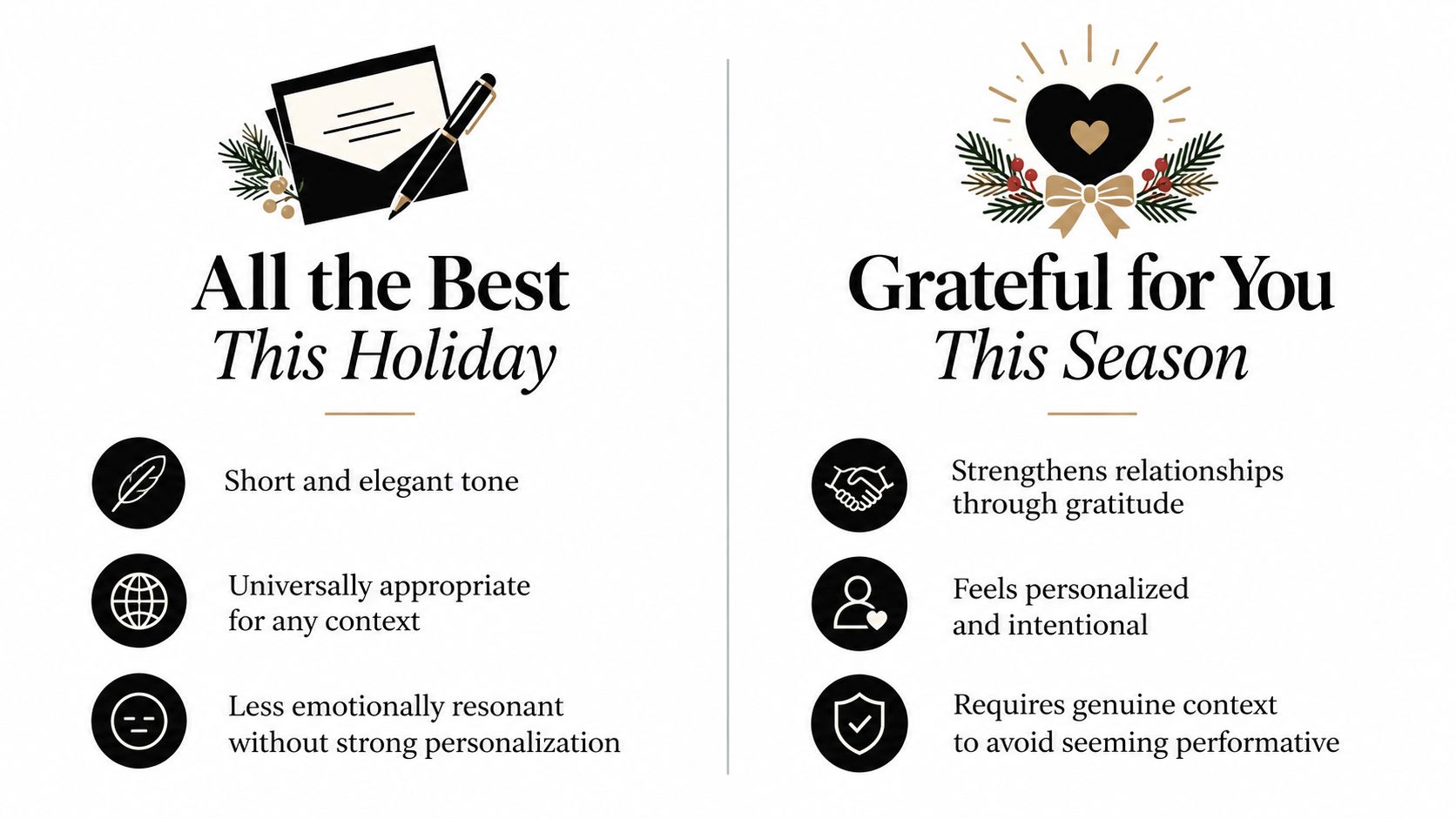
All the Best This Holiday is concise, polished, and emotionally measured. Choose it for a client, professional acquaintance, mentor, former colleague, or work contact who has become a personal connection but still requires some formality.
The phrase avoids the distance of a bare “Best” while stopping short of “With love.” It also leaves more room for the message and artwork, which makes it useful for an elegant card with a restrained design.
Put the warmth in the opening
Because the sign-off is brief, the preceding sentence should carry the personal detail. Thank the recipient for their guidance, mention a successful collaboration, or refer to a conversation you valued. A concise closing doesn't mean the card has to feel generic.
Use a balanced layout with clear margins and readable type. A monochrome illustration, understated pattern, architectural photograph, or carefully chosen seasonal image can support the tone. Avoid playful fonts if the recipient expects a professional message, and avoid placing the words directly over a busy photograph.
Use the closing for a mixed personal-business relationship when you're unsure whether a more emotional phrase would cross a boundary. Address the recipient by name, keep the message sincerely appreciative, and sign with your own name rather than hiding behind a vague group signature.
A short closing works when the sentence before it proves that you know who you're writing to.
8. Grateful for You This Season
Grateful for You This Season turns the holiday card into a direct expression of appreciation. It fits a mentor, close friend, supportive relative, valued client, volunteer, teacher, or anyone who made a meaningful difference during the year.
This sign-off requires evidence. Don't use it as a decorative substitute for a thank-you. Name the quality, action, or moment you appreciate in the main message. “Your advice helped me approach the transition with confidence” gives the closing a clear purpose. “Thanks for everything” usually doesn't.
Choose the recipient before the design
For a mentor, use an image connected to a shared interest or milestone. For a close friend, a photo from a meaningful day can make the card feel intimate. For a business contact, use a clean design and describe the value of the relationship without making a commercial request.
A handwritten addition can deepen the effect. Write one sentence that wasn't included in the printed message, especially if the card is going to someone who receives formal notes from many people. Keep the handwriting legible and make sure it doesn't cover the artwork or the printed closing.
This phrase is also suitable for an end-of-year appreciation card from a small business, provided the message remains human. Address the recipient directly, identify the relationship, and sign with the people who genuinely know them. A large logo or promotional offer can weaken the sense of gratitude.
Read the complete message beside the sign-off. If the card talks mostly about your own accomplishments, revise it so the recipient receives the attention the closing promises.
9. May Your Holidays Be Merry and Bright
May Your Holidays Be Merry and Bright is a traditional, cheerful choice for family cards, longtime friends, multigenerational households, and recipients who enjoy familiar seasonal language. It feels nostalgic without requiring a particular religious reference.
The phrase has a strong rhythm, so it benefits from readable typography and enough space around the words. Use it with a warm opening about family traditions, a favorite gathering, or a memory from the past year. It can also close a photo card effectively when the image carries the personal story.
Build a timeless card
Warm lights, greenery, snow, watercolor textures, and hand-drawn details all complement this closing. A family photograph can work well, but choose one where the subjects are clear and the crop leaves space for the message. If you're sending the same design to several households, personalize the text even when the artwork stays consistent.
For a recipient who celebrates a different winter holiday, use the broader seasonal wording in the opening and let the closing remain inclusive. For someone who prefers a specific tradition, adapt the entire message rather than changing only the final line. The sign-off should agree with the greeting, image, and recipient.
A traditional phrase can still feel current when the personal sentence is fresh. Mention a new home, a changed family routine, a meal you shared, or a plan for the coming year. Familiar wording provides the seasonal atmosphere, while the detail makes the card belong to this relationship.
If you want more ideas for balancing classic warmth with inclusive wording, explore this holiday message guide.
The final check is visual. Make sure the lettering remains easy to read at the actual card size, not only on your screen.
10. Here's to New Beginnings
Here's to New Beginnings looks ahead. Use it for a recipient starting a new job, moving house, graduating, changing careers, entering a new relationship, or closing a difficult chapter. It also suits a year-end card that naturally leads into New Year hopes.
The phrase is encouraging without sounding like a prediction. It recognizes change and gives the recipient room to define what comes next. Keep the opening focused on their experience, not on advice. “I'm excited to see where this next chapter takes you” feels supportive. A lecture about goals or resolutions doesn't.
Let the design signal movement
Contemporary typography, open space, sunrise imagery, a road, a doorway, or an uplifting color palette can reinforce the forward-looking tone. Use a personal photo if it captures a genuine milestone. Avoid generic motivational graphics when the recipient has a specific transition you can acknowledge.
This sign-off can also support a milestone card that crosses holiday and New Year territory. Mention the achievement, offer encouragement, and keep the final line concise. For a colleague, refer to the opportunity ahead. For a family member, connect the new chapter to your continued support.
When you're uncertain whether the recipient wants attention drawn to a major change, use a gentler opening and let the sign-off remain hopeful rather than celebratory. The goal is to acknowledge the person accurately.
For a broader guide to choosing a card format for milestones and seasonal messages, review these types of greeting cards. Then check whether the artwork, font, and message all point in the same direction.
Top 10 Holiday Card Sign-Offs Comparison
| Sign-off | 🔄 Implementation Complexity | ⚡ Resource Requirements | ⭐ Expected Outcomes | 📊 Ideal Use Cases | 💡 Key Advantages |
|---|---|---|---|---|---|
| Warmest Wishes | Low, plug-and-play | Minimal, no personalization required | ⭐⭐⭐⭐ Universal warmth; professional & personal | Mixed recipient lists, corporate and family mailings | Timeless, versatile, pairs with most designs |
| Thinking of You This Season | Medium, needs thoughtful composition | Medium, personalized content or photo recommended | ⭐⭐⭐⭐ More memorable; creates recipient-centered connection | Friends, extended family, meaningful professional relationships | Feels hand-selected; enhances personal connection |
| With Love and Joy | Medium, tone must match relationship | Medium, warm visuals or family photos preferred | ⭐⭐⭐⭐⭐ Strong emotional impact for close ties | Close family, intimate friends, sentimental senders | Deeply resonant; encourages card keeping |
| Cheers to the Season | Low, casual, easy to apply | Low, playful artwork and fonts recommended | ⭐⭐⭐ Relatable and upbeat among younger/casual audiences | Friends, younger recipients, casual coworkers | Modern, approachable, differentiates from formal tone |
| Sending Peace and Happiness | Low–Medium, design coordination advised | Medium, calming, nature-inspired artwork helpful | ⭐⭐⭐⭐ Inclusive, thoughtful, calming impact | Diverse recipient lists, wellness-focused senders | Religiously and culturally inclusive; serene tone |
| Hope for a Happy Holiday | Low, broadly applicable | Low–Medium, uplifting imagery supports message | ⭐⭐⭐⭐ Sincere, bridges formal and informal contexts | Mixed professional/personal mailing lists | Optimistic and widely appropriate |
| All the Best This Holiday | Low, concise and straightforward | Low, professional design aesthetic recommended | ⭐⭐⭐ Professional warmth; unobtrusive | Formal/professional contexts, executive cards | Elegant, short, fits tight layouts without competing with design |
| Grateful for You This Season | Medium, needs authentic context | Medium, specific examples or personalization advised | ⭐⭐⭐⭐ Strengthens relationships; high emotional resonance | Thank-you cards, donors, mentors, end-of-year appreciation | Centers gratitude; feels intentional and memorable |
| May Your Holidays Be Merry and Bright | Medium, longer phrase needs design space | Medium, warm, festive imagery recommended | ⭐⭐⭐⭐ Nostalgic and memorable across generations | Family cards, tradition-focused senders, multi-gen audiences | Festive, literary charm; strong tradition appeal |
| Here's to New Beginnings | Medium, best with contextual framing | Medium, contemporary, aspirational visuals helpful | ⭐⭐⭐⭐ Motivational and forward-looking | New Year greetings, milestones, career transitions | Encouraging, unique for milestone-focused messaging |
Make the Sign-Off Feel Personally Chosen
Start with the recipient, not the phrase. Decide whether you're writing to close family, a friend-of-a-friend, an in-law, a blended family member, a newer relationship, a client, or a colleague who has become a friend. That relationship distance immediately rules out some closings and makes others feel natural.
Next, choose the emotional intent. Use Warmest Wishes for reliable warmth across a mixed list. Choose Thinking of You This Season when the recipient matters but the relationship is less intimate. Select With Love and Joy for open affection, Cheers to the Season for casual energy, and Sending Peace and Happiness for calm, inclusive goodwill.
Use Hope for a Happy Holiday when you want optimism without pressure. Choose All the Best This Holiday for professional restraint, Grateful for You This Season for direct appreciation, May Your Holidays Be Merry and Bright for classic tradition, and Here's to New Beginnings for a milestone or forward-looking message.
Then read the closing beside the opening sentence. Don't judge either line in isolation. “Thank you for helping me through a demanding year” naturally supports gratitude or peace. “We can't wait to see you at the family gathering” can support a warmer, more celebratory phrase. A closing that sounds awkward beside the opening probably doesn't match the relationship.
Check the complete card before sending
Review four elements together:
- Recipient: Confirm the spelling of the name, household details, address, and any title you've chosen.
- Message: Look for a specific detail that proves the card wasn't copied from a generic template.
- Design: Make sure the typography, photo, artwork, and color palette reinforce the emotional tone.
- Delivery: Confirm the destination and the estimated arrival window before approving the order.
A short specific detail usually does more than an elaborate closing. Mention the shared walk, the advice, the family tradition, the project, or the meal. That detail gives a familiar phrase a reason to be there.
For senders using Mail This, review the complete card in the approval preview before payment, including the design, recipient, and total. Mail This lists a $9.99 card price, including domestic postage, and shows applicable tax upfront. Domestic delivery dates are estimated rather than guaranteed, so check the timing before approving a holiday card for a specific occasion.
The physical format matters, too. Leave enough room for the sign-off and any handwritten note. Make sure generated artwork doesn't contain essential wording that could compete with the independently typeset message. A clean final proof protects the exact sentence you intended to send.
Choose one sign-off now, then draft the personalized sentence that comes before it. Read both lines aloud, adjust the design to match, and approve the card only after the recipient, wording, artwork, and delivery details feel right.
Mail This turns a short holiday-card idea into personalized physical artwork and wording, then lets you review the complete design before printing, addressing, and domestic mailing. Use it to match each recipient with the right sign-off and send a card that feels chosen rather than automatic. Visit Mail This to start your holiday card.